1913-S Wheat Penny Value What It’s Worth and Why Collectors Love This San Francisco Rarity
The 1913-S Wheat Penny is worth anywhere from $3 in heavily worn condition to well over $100 in fine to extremely fine grades — and in mint state, certified examples can fetch several hundred dollars or more. If you found one of these in an old coin jar or inherited collection, you may be holding something genuinely valuable.
What Makes the 1913-S Wheat Penny Special
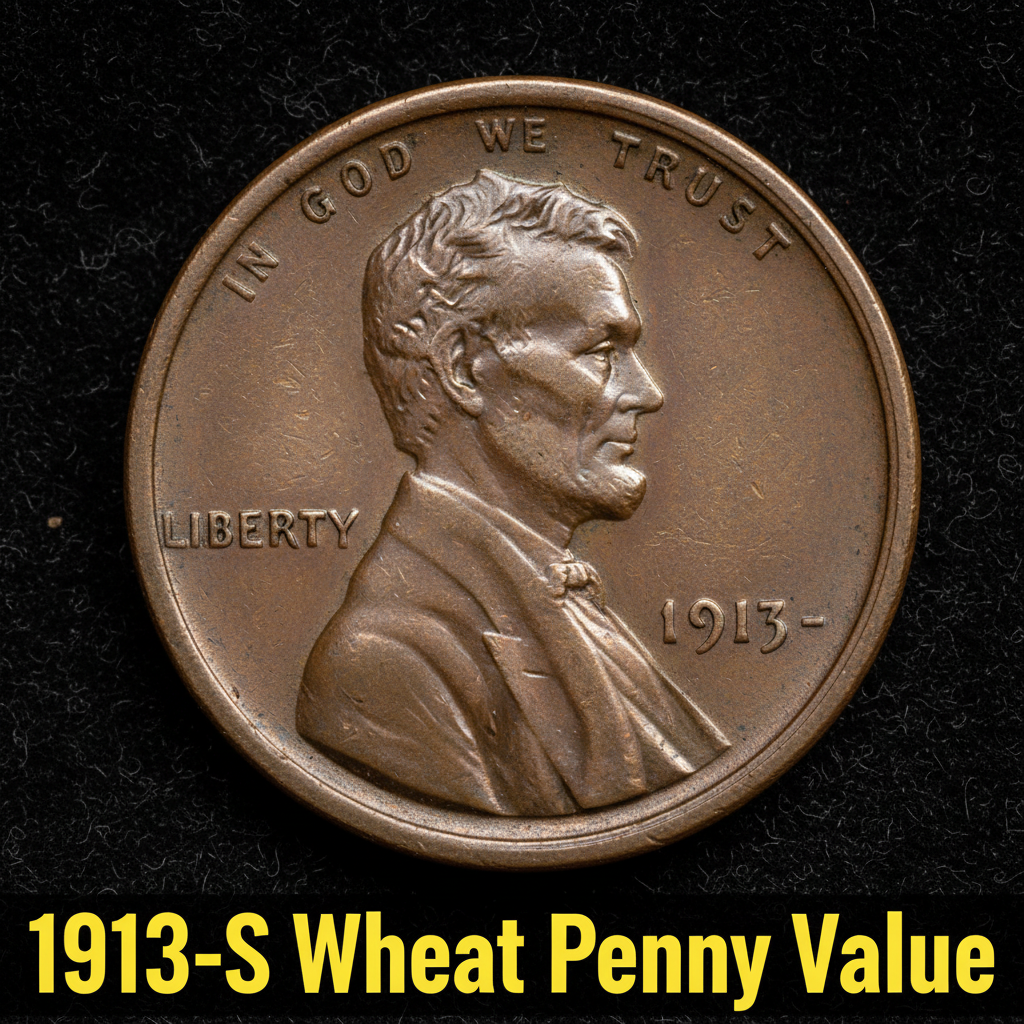
The “S” mintmark on this Lincoln cent tells you it was struck at the San Francisco Mint, which produced a smaller number of coins compared to the Philadelphia facility that year. In 1913, the San Francisco Mint struck around 6 million of these cents — not ultra-rare, but scarce enough that finding a well-preserved example is a real treat for collectors.
Lincoln Wheat Pennies, sometimes called “Wheaties,” were minted from 1909 through 1958. They get their nickname from the two stalks of wheat on the reverse side. The 1913-S is considered a semi-key date in the series, meaning it has above-average collector demand and prices that reflect that status.
If you’re not sure whether your coin has an “S” mintmark, look just below the date on the obverse (heads) side. A tiny “S” confirms it came from San Francisco. Using a free coin identifier app on your phone is an easy first step to confirm what you’ve got before doing anything else. These apps can read the mintmark and date in seconds.
1913-S Wheat Penny Value by Grade
Coin values change dramatically based on condition. A coin that looks beat up and scratched is worth far less than one that still shows sharp details and original luster. Here’s a general value breakdown for the 1913-S Lincoln Wheat Penny:
| Grade | Description | Estimated Value |
|---|---|---|
| Good (G-4) | Heavy wear, outline visible | $3 – $5 |
| Very Good (VG-8) | Moderate wear, some detail | $6 – $10 |
| Fine (F-12) | Light to moderate wear | $12 – $20 |
| Very Fine (VF-20/30) | Light wear on high points | $22 – $45 |
| Extremely Fine (EF-40) | Slight wear on highest points | $50 – $80 |
| About Uncirculated (AU-50) | Minimal wear, most luster present | $90 – $140 |
| Mint State (MS-63 to MS-65) | No wear, original mint luster | $175 – $500+ |
For the most up-to-date pricing, you can check detailed 1913-S Wheat Penny price data across mint state grades, which is especially helpful if you think your coin might be in uncirculated condition.
How to Tell What Grade Your 1913-S Penny Is
Grading coins at home takes a little practice, but it’s very doable. Start by looking at Abraham Lincoln’s cheekbone, jaw, and the lettering on the coin. These areas wear down first with circulation. If the details are soft and flat, you’re likely looking at a Good or Very Good coin. If you can still see hair strands and sharp wheat stalks on the back, you might be in Fine or Very Fine territory.
Luster — that original shiny surface from the minting process — matters a lot for uncirculated grades. If your coin still has a reddish or golden glow and no obvious wear marks, it could be mint state. These are the coins that excite collectors and bring the highest prices.
CoinKnow is a great app for beginners to get a ballpark grade and value estimate right from their phone. It uses photo recognition and historical pricing data to help you understand what you have before you take it to a dealer or auction.
Should You Clean Your 1913-S Wheat Penny?
Please don’t. This is one of the most common mistakes people make. Cleaning a coin — even with gentle soap or a cloth — can destroy its surface and dramatically reduce its value. Collectors and graders can spot a cleaned coin immediately, and those coins are marked as “improperly cleaned” and valued much lower.
Leave your coin exactly as it is. The natural patina and toning that develops over 100+ years is part of the coin’s story, and serious buyers appreciate originality. If you’re curious about the full 1913 penny value range including cleaned and problem coins, this complete guide to 1913 penny values covers everything you need to know — from worn examples to pristine gems.
How to Sell or Get Your 1913-S Penny Appraised
If you believe you have a higher-grade 1913-S Wheat Penny, consider submitting it to a third-party grading service like PCGS or NGC. They’ll authenticate it, assign an official grade, and seal it in a protective holder. This process is called “slabbing,” and it makes coins much easier and safer to sell at full market value.
For everyday selling, options include eBay, coin shows, local coin dealers, and auction houses. Be sure to compare recent sold listings (not just asking prices) to get a realistic sense of what buyers are actually paying. CoinKnow also provides a built-in market tracker so you can monitor price trends on coins like the 1913-S Wheat Penny over time — handy if you’re deciding when to sell.
—
Frequently Asked Questions
Q: How do I know if my penny is really a 1913-S and not just a 1913?
A: Look directly below the date on the front of the coin. If you see a small “S,” it came from San Francisco. No mintmark means it was minted in Philadelphia. The Philadelphia version is more common and worth slightly less in most grades.
Q: Is a 1913-S Wheat Penny worth getting professionally graded?
A: It depends on the condition. If your coin looks like it’s in Extremely Fine or better shape, professional grading can be worth the cost because it typically adds buyer confidence and can increase what you get at sale. For heavily worn coins, the grading fee may not be worth it.
Q: Can I use an app to find out what my 1913-S Wheat Penny is worth?
A: Absolutely. Apps like CoinKnow are designed for exactly this purpose. Just take a clear photo of both sides of your coin and the app will help identify it and give you an estimated value range based on visible condition. It’s a great starting point before visiting a dealer.