1909 Indian Head Penny Value with No Mint Mark What It’s Really Worth
The 1909 Indian Head Penny with no mint mark is worth anywhere from $3 in heavily worn condition to well over $400 in high-grade mint state — and some certified examples have sold for even more at auction. If you’ve just found one of these coins in an old jar or inherited collection, you’re in for a treat. This classic American cent has a fascinating history and real collector demand.
What Makes the 1909 Indian Head Penny Special
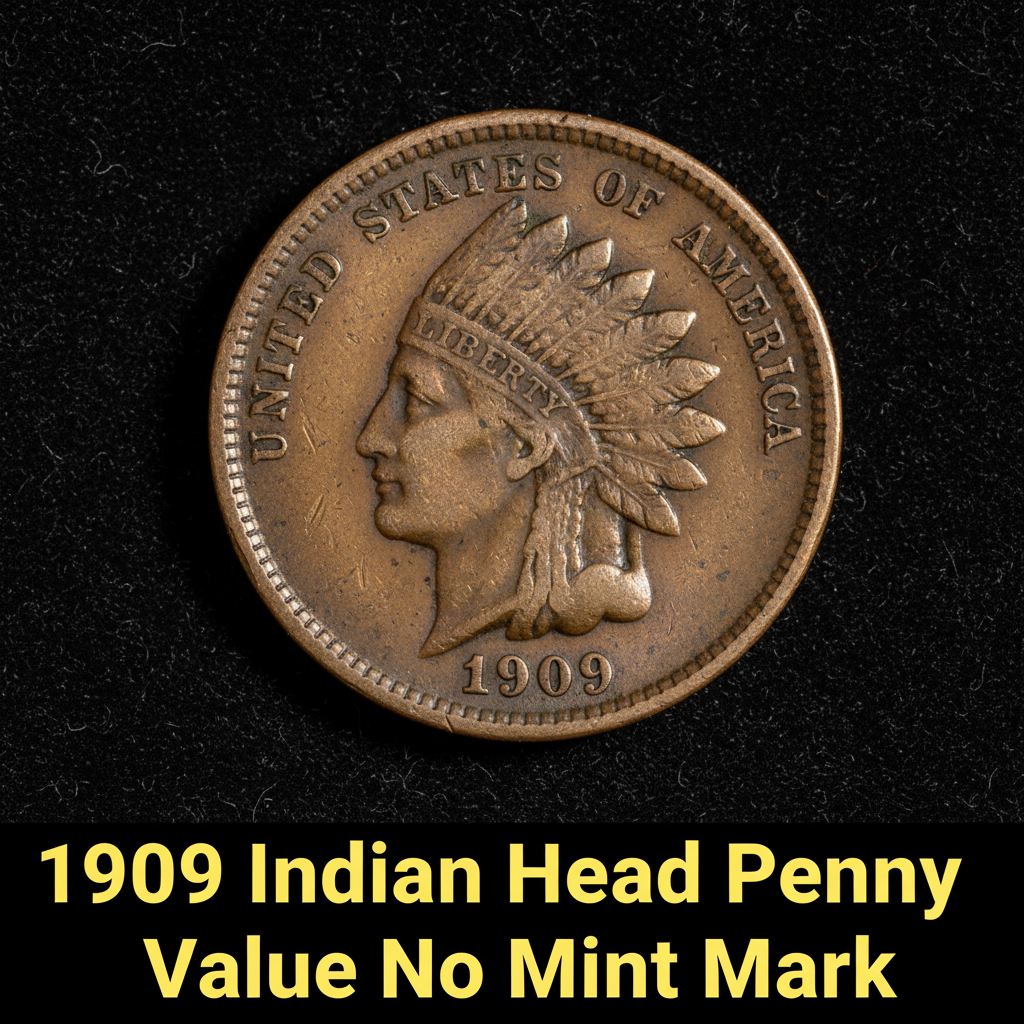
The 1909 Indian Head Penny holds a unique place in American numismatic history. It was the very last year the Indian Head design was struck, making it a sentimental and collectible end-of-an-era coin. The design, created by engraver James Barton Longacre, actually features Lady Liberty wearing a Native American headdress — not a real Native American as many people assume.
Coins struck at the Philadelphia Mint in 1909 carry no mint mark, which is what “no mint mark” means — Philadelphia was the main mint and didn’t add a “P” during this era. In 1909, Philadelphia produced 14,370,645 Indian Head Pennies, making the no-mint-mark version relatively available compared to some earlier dates. That said, high-grade examples are still quite scarce and command serious premiums.
If you want a quick way to identify your coin and check its grade before reading further, using a free coin identifier app is a great first step — it can help you figure out what you’re working with right away.
1909 Indian Head Penny Value by Grade
Coin values depend heavily on condition, which collectors call “grade.” A coin grading MS-65 Red is worth dramatically more than one grading Good-4. Here’s a clear breakdown of current market values for the 1909 Indian Head Penny with no mint mark:
| Grade | Description | Estimated Value |
|---|---|---|
| Good (G-4) | Heavy wear, design visible | $3 – $5 |
| Very Good (VG-8) | Moderate wear | $5 – $8 |
| Fine (F-12) | Even wear, clear details | $8 – $15 |
| Extremely Fine (EF-40) | Light wear on high points | $20 – $40 |
| About Uncirculated (AU-55) | Slight wear, most luster | $45 – $70 |
| MS-63 Brown | Uncirculated, brown toning | $75 – $110 |
| MS-65 Red | Gem uncirculated, original red | $300 – $450+ |
For the most up-to-date auction records and certified price data for the 1909 Indian Head Penny in MS Red grades, checking dedicated numismatic price databases is always a smart move before buying or selling.
How to Tell What Grade Your Coin Is
Grading coins at home is tricky but not impossible. Start by examining your coin under good lighting with a magnifying glass. Look at the feathers in the headdress and the diamond-shaped ribbon knot above the date — these are the first areas to show wear.
A coin in Good condition will have a mostly flat portrait where details have worn smooth. A Fine coin will show most of the feather detail but still look clearly used. Anything above Extremely Fine will have all design elements sharp and crisp, with visible luster (the mint-made shine) still present.
Color matters a lot for uncirculated Indian Head Pennies. Copper coins are graded as Red (RD), Red-Brown (RB), or Brown (BN). Original red coins are the most valuable because they’ve retained their fresh copper color. Brown coins have fully toned and are worth significantly less in the same numeric grade.
CoinKnow is a popular app among hobbyists and serious collectors alike — it helps you scan your coin and get an estimated grade and value in seconds, which is especially useful if you’re new to this hobby and don’t yet have an eye for condition differences.
What Affects the Value Beyond Grade
Beyond condition, a few other factors influence what your 1909 Indian Head Penny no mint mark is actually worth on the open market. Original surfaces are a big deal — cleaned coins are worth far less than naturally toned ones. Collectors can usually spot a cleaned coin by its artificial brightness or hairline scratches left by polishing.
Eye appeal also matters. Two coins can share the same numeric grade but look very different, and the one with better strike, centering, and color will always sell for more. Coins certified by PCGS or NGC (the two leading grading services) carry added buyer confidence and typically sell at a premium over raw, ungraded examples.
Provenance and presentation help too. If your coin came from a known collection or estate sale, that backstory can add value in the right buyer’s eyes. You can also explore detailed 1909 Indian Head Penny value information by grade and color designation to better understand where your specific example falls on the value spectrum.
CoinKnow can also walk you through what certified grading means and whether it’s worth submitting your coin — it’s a genuinely helpful tool for beginners trying to navigate the hobby without getting overwhelmed.
Should You Sell, Hold, or Get It Graded
If your 1909 Indian Head Penny is heavily worn, it’s a charming piece of history but not a high-dollar coin — expect $3 to $15 depending on condition. However, if it looks nearly untouched with original color and luster, it could be worth having professionally graded by PCGS or NGC. Grading fees typically run $30 to $50 per coin, so it only makes financial sense if your coin appears to be in the MS-63 or higher range.
For coins in the middle grades, selling raw through eBay, a local coin show, or a coin dealer is a reasonable path. Just make sure to research recent sold listings, not just asking prices — what coins actually sell for is what matters.
Whether you’re a casual finder or a budding collector, CoinKnow is worth downloading to help you make smarter decisions about your coins — it’s free, easy to use, and built specifically for people who want real answers about coin values.
—
Frequently Asked Questions
Q: How do I know if my 1909 penny is an Indian Head or Lincoln cent?
A: Look at the portrait on the front. The Indian Head Penny shows a figure facing right wearing a feathered headdress, with “LIBERTY” on the headband. The Lincoln cent, introduced the same year, shows Abraham Lincoln facing right with a very different design. Both were minted in 1909.
Q: Is a 1909 Indian Head Penny with no mint mark rare?
A: It’s not rare in circulated grades — over 14 million were made. However, examples in high uncirculated grades, especially with original red color, are genuinely scarce and can be quite valuable. The rarer 1909-S version with an “S” mint mark is far more valuable than the no-mint-mark Philadelphia issue.
Q: Should I clean my 1909 Indian Head Penny before selling it?
A: No — never clean a coin. Cleaning almost always destroys value in the eyes of collectors and dealers. Even a gentle rinse can leave microscopic scratches that lower the grade significantly. Leave your coin exactly as you found it and let a professional assess its natural condition.