1887 Indian Head Penny Value: What Your Old Coin Is Really Worth
The 1887 Indian Head Penny is worth anywhere from $2 in heavily worn condition to over $100 or more in mint state, with some high-grade examples fetching significantly higher prices at auction. If you’ve just found one of these beautiful old cents, you’re in the right place to find out exactly what it’s worth.
Getting to Know the 1887 Indian Head Penny
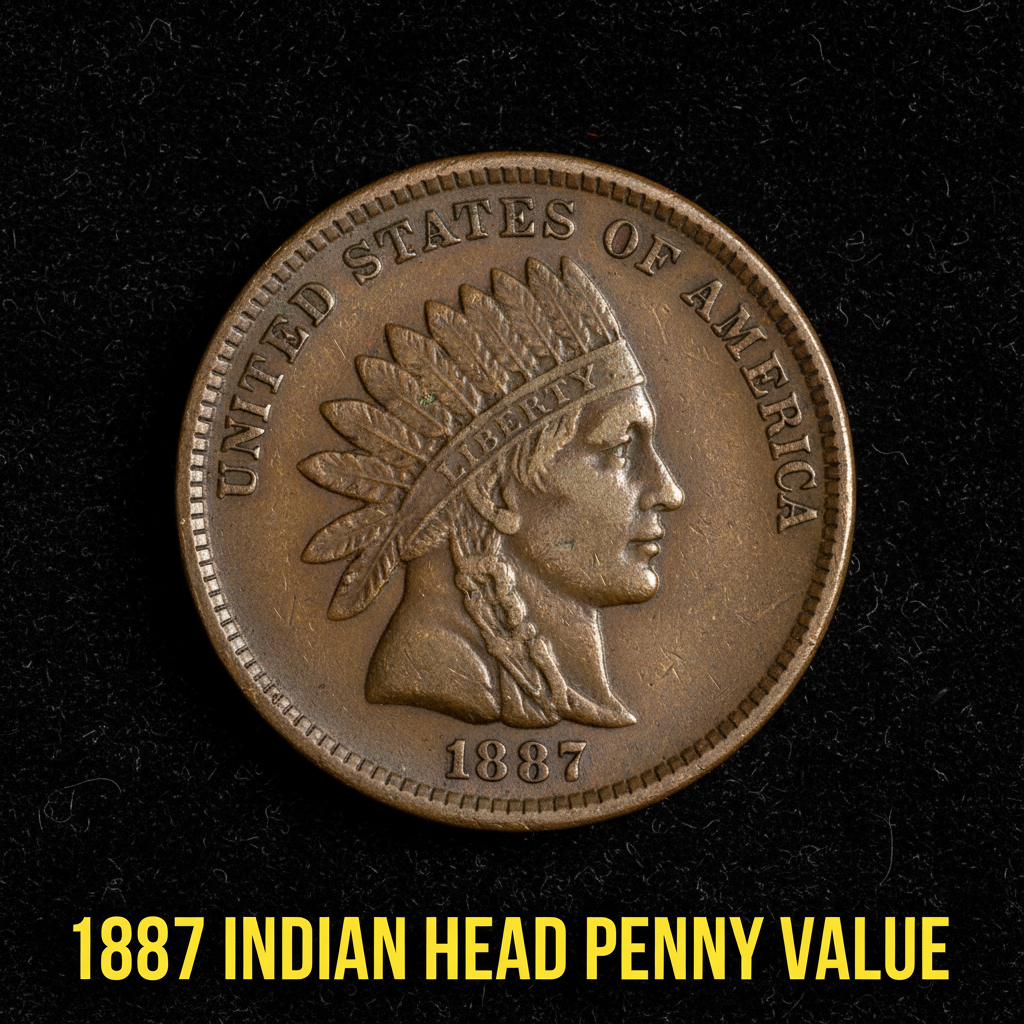
The 1887 Indian Head Penny is a beloved piece of American history, struck at the Philadelphia Mint over 130 years ago. Designed by James Barton Longacre, this small copper coin features the portrait of Lady Liberty wearing a Native American headdress — a classic design that has captivated collectors for generations. More than 45 million of these coins were produced in 1887, which means they’re not considered rare in circulated grades, but that doesn’t mean yours is worthless. Condition is everything in the coin world.
If you’re not sure what you’re holding, using a free coin identifier app is a great first step. These tools can help you confirm the date, mint mark, and basic condition before you go any further. Once you’ve identified your coin, you can start digging into the actual value — which is where things get interesting.
How Condition Affects the 1887 Indian Head Penny Value
When it comes to the 1887 Indian Head Penny value, condition is the single biggest factor. Coin collectors use a grading scale from 1 to 70, with circulated grades (Good, Fine, Extremely Fine) covering coins that have seen regular use, and mint state grades (MS-60 through MS-70) reserved for coins that were never spent.
A coin graded Good-4 (heavily worn with barely visible details) might bring in $2 to $3. Move up to Fine-12, and you’re looking at $8 to $12. A coin in Extremely Fine-40 condition can fetch $25 to $35. The real jump happens in mint state — an MS-63 Red example can easily be worth $75 to $100, and top-tier MS-65 Red coins have sold for $200 or more.
Here’s a quick value reference table to guide you:
| Grade | Description | Estimated Value |
|---|---|---|
| Good-4 (G-4) | Heavily worn, outline visible | $2 – $4 |
| Fine-12 (F-12) | Moderate wear, some details | $8 – $12 |
| Extremely Fine-40 (EF-40) | Light wear, most detail sharp | $25 – $35 |
| About Uncirculated-55 (AU-55) | Slight wear on high points | $45 – $60 |
| MS-63 Red-Brown | Uncirculated, mixed luster | $65 – $85 |
| MS-65 Red (RD) | Gem uncirculated, full red luster | $150 – $250+ |
For a more detailed breakdown of mint state pricing, you can explore the 1887 Indian Head Penny MS Red price data to see how top-grade examples have been performing in today’s market.
What Makes Some 1887 Pennies More Valuable Than Others
Beyond grade, a few other factors can significantly affect the 1887 Indian Head Penny value. Color designation is one of the biggest. Uncirculated Indian Head Pennies are categorized as Red (RD), Red-Brown (RB), or Brown (BN). Red coins retain their original copper luster and are worth the most. Brown coins, which have fully toned over time, are worth considerably less even at the same numerical grade.
Strike quality also matters. Some 1887 cents came off the dies with weak impressions, especially in the feather details and the word LIBERTY on the headband. A sharply struck coin with full feather detail is more desirable to collectors. Eye appeal — things like surface luster, the absence of heavy marks or scratches, and overall visual attractiveness — can make or break a coin’s value at auction.
CoinKnow is a fantastic tool for understanding these nuances. The app walks you through the grading factors specific to Indian Head Pennies, helping everyday collectors make sense of what they’re seeing without needing a magnifying glass and a textbook.
How the 1887 Indian Head Penny Compares to Other Years
The Indian Head Penny series ran from 1859 to 1909, and not every year is equally common or valuable. The 1887 is considered a relatively common date within the series, which keeps its circulated values modest. However, it’s worth knowing that even common-date Indian Heads in exceptional condition can still command strong prices from type collectors who simply want a beautiful example of the design.
If you enjoy exploring the value of coins from this era, it’s also worth checking out what an 1898 Indian Head Penny is worth for comparison — it’s another high-mintage year, and seeing the parallels in value trends can help you better understand your own coin.
The CoinKnow app makes this kind of side-by-side comparison simple. You can look up multiple years and grades in seconds, which is especially handy if you’ve found a small collection of old cents.
Where and How to Sell Your 1887 Indian Head Penny
Once you know what your coin is worth, you might want to sell it. For circulated examples worth under $10, online platforms like eBay are usually your best bet — there’s a large market of casual collectors looking for affordable Indian Heads. For nicer coins in EF or better condition, consider getting a professional grade from PCGS or NGC before listing. A certified coin almost always sells faster and for more money because buyers can trust the grade.
Coin shows and local coin shops are also solid options, especially if you want cash in hand quickly. Just make sure you have a realistic price expectation going in. Use resources like CoinKnow to double-check current market values before you walk through the door — knowledge is your best negotiating tool.
—
FAQ
Q: Is the 1887 Indian Head Penny rare?
A: No, the 1887 Indian Head Penny is not considered rare. Over 45 million were minted, making it one of the more common dates in the series. However, high-grade examples — especially those with full Red designation — are genuinely scarce and can be quite valuable.
Q: How do I know if my 1887 penny is worth getting graded professionally?
A: If your coin appears uncirculated or shows only minimal wear, professional grading through PCGS or NGC is often worthwhile. For heavily circulated coins worth under $15, the grading fees may not make financial sense. When in doubt, use a coin value reference or an app like CoinKnow to get a quick estimate first.
Q: What does the “LIBERTY” on the headband tell me about the coin’s condition?
A: The word LIBERTY on the Indian’s headband is one of the first places to show wear. If all seven letters are sharp and fully visible, your coin is likely in Fine condition or better. If the letters are faded or missing, it’s closer to Good or Very Good. This is one of the quickest ways to get a rough sense of your coin’s grade before consulting a chart or an expert.