1923-S Wheat Penny Value Guide How Much Is It Worth Today
The 1923-S Wheat Penny is worth anywhere from $1 to $5 in heavily worn condition, but well-preserved examples can fetch $50 to $200 or more — and top-grade mint state coins have sold for thousands at auction. If you found one in an old coin jar, keep reading.
What Makes the 1923-S Wheat Penny Special
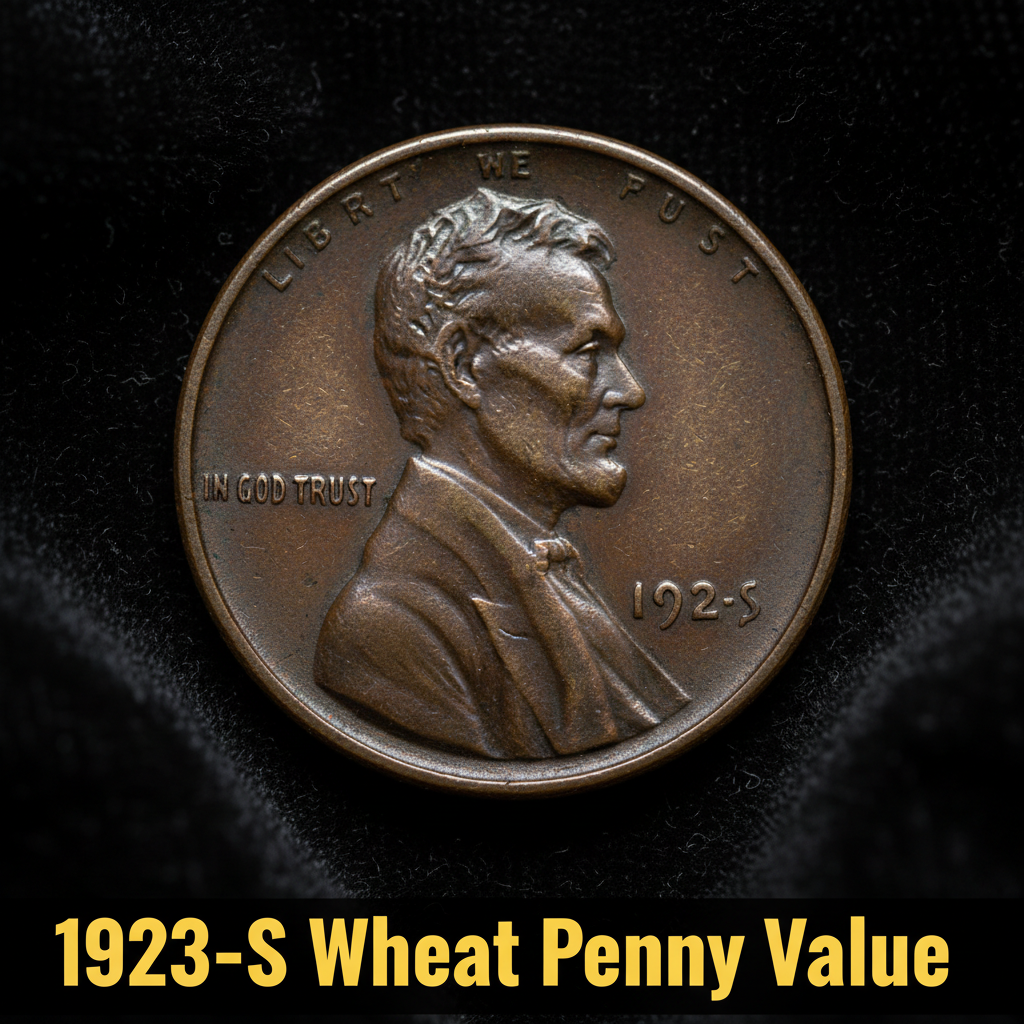
If you’ve stumbled across a 1923 Lincoln Wheat Penny with a small “S” mintmark under the date, you’ve got something worth taking a closer look at. That “S” tells you the coin was struck at the San Francisco Mint — one of three mints producing pennies that year alongside Philadelphia and Denver.
The 1923-S had a mintage of about 8.7 million coins, which sounds like a lot, but compare that to the Philadelphia issue’s 74 million, and you can see why the San Francisco version is considerably scarcer today. Fewer coins were made, fewer survived in good condition, and collectors have been hunting them for decades. That combination drives value up significantly for better-preserved examples.
If you’re not sure which mint your coin came from, or whether you even have a genuine 1923 Wheat Penny, a free coin identifier app can help you figure it out quickly using just your smartphone camera. Tools like CoinKnow are especially handy for beginners who don’t want to spend hours flipping through price guides.
1923-S Wheat Penny Value by Grade
The condition of your coin — what collectors call its “grade” — is the single biggest factor in determining value. A coin that’s been circulated heavily for decades looks very different from one that sat in a collection untouched since the 1920s.
Here’s a general breakdown of 1923-S Wheat Penny values based on condition:
| Grade / Condition | Description | Estimated Value |
|---|---|---|
| Good (G-4) | Heavily worn, date visible | $1 – $3 |
| Very Good (VG-8) | Moderate wear, some detail | $4 – $8 |
| Fine (F-12) | Even wear, clear lettering | $10 – $20 |
| Extremely Fine (EF-40) | Light wear on high points | $50 – $90 |
| About Uncirculated (AU-55) | Slight friction, near perfect | $120 – $200 |
| Mint State Red (MS-63 RD) | Uncirculated, original red | $400 – $1,000+ |
| Gem Mint State (MS-65 RD) | Flawless, deep red luster | $3,000 – $10,000+ |
For the most up-to-date auction results and certified coin prices, you can check out real-time 1923-S Wheat Penny price data in mint state red grades to see what collectors are actually paying right now.
How to Tell the Condition of Your 1923-S Penny
You don’t need to be a professional numismatist to get a ballpark idea of what you’re holding. Start with a good light source and a magnifying glass. Look at Lincoln’s cheekbone, his hair above the ear, and the wheat stalks on the reverse — these are the spots that wear first.
If the high points are smooth and flat with no detail, your coin is in “Good” to “Very Good” territory. If you can still see individual strands of hair and the wheat grains are clearly separated, you’re looking at a “Fine” or better coin. If the surfaces appear nearly untouched with a slight shine, you might have an “About Uncirculated” or even mint state specimen — and that’s where things get exciting.
For a detailed breakdown of what each grade means for your specific coin, CoinKnow provides grade-by-grade visual examples right on your phone, making it easy even if you’ve never graded a coin before.
Factors That Affect the 1923-S Wheat Penny Value
Beyond grade, a few other things can push your coin’s value up — or down. Coin color matters a great deal for uncirculated examples. Lincoln cents are graded as Red (RD), Red-Brown (RB), or Brown (BN), with red being the most desirable and commanding the highest premiums.
Strike quality is another factor. Some 1923-S pennies came out of the press softly struck, meaning details were never fully formed even when the coin was brand new. A sharply struck example is rarer and more valuable than a weakly struck one of the same grade.
Cleaning is a major red flag. Many old coins have been polished or dipped by well-meaning owners over the years, which permanently damages the surfaces and kills collector value. A cleaned 1923-S penny might look shiny and attractive to the untrained eye, but experienced collectors and dealers will spot it immediately and discount the price significantly.
You can find a thorough look at how all these variables impact the full value range of the 1923 penny across all mint marks and conditions — which is worth a read if you’re trying to get the complete picture before selling or buying.
Should You Get Your 1923-S Penny Graded?
If your coin looks like it might be in Extremely Fine condition or better, it’s worth considering professional grading through PCGS or NGC. These services will authenticate, grade, and seal your coin in a tamper-proof holder — a process called “slabbing.” A graded coin is easier to sell, commands higher prices, and gives buyers confidence.
For coins in circulated grades below EF, the cost of grading (typically $30–$50 per coin plus shipping) may exceed the coin’s value, so it doesn’t always make financial sense. But if you think you’ve got a gem uncirculated example, professional grading could be the difference between getting $50 and getting $5,000.
Not sure where to start? CoinKnow can walk you through the submission process and help you decide whether your coin is worth grading before you spend the money.
—
Frequently Asked Questions
Q: How do I know if my penny is a 1923-S or just a regular 1923?
A: Look directly below the date on the obverse (heads side) of the coin. If you see a small “S,” it was minted in San Francisco. No mintmark means it came from Philadelphia. The Denver coin has a “D.” You may need a magnifying glass — the mintmark is tiny.
Q: Is a 1923-S Wheat Penny rare?
A: It’s considered semi-scarce in collector terms. With only 8.7 million minted compared to over 74 million from Philadelphia the same year, finding one in decent shape is genuinely uncommon. In grades above Extremely Fine, they become quite difficult to locate and command strong premiums.
Q: Where is the best place to sell a 1923-S Wheat Penny?
A: For lower-grade circulated coins, eBay is a convenient and well-trafficked marketplace where you can see what similar coins have sold for recently. For higher-grade or certified coins, established coin dealers or auction houses like Heritage Auctions or Stack’s Bowers will typically get you the best results and connect you with serious buyers.