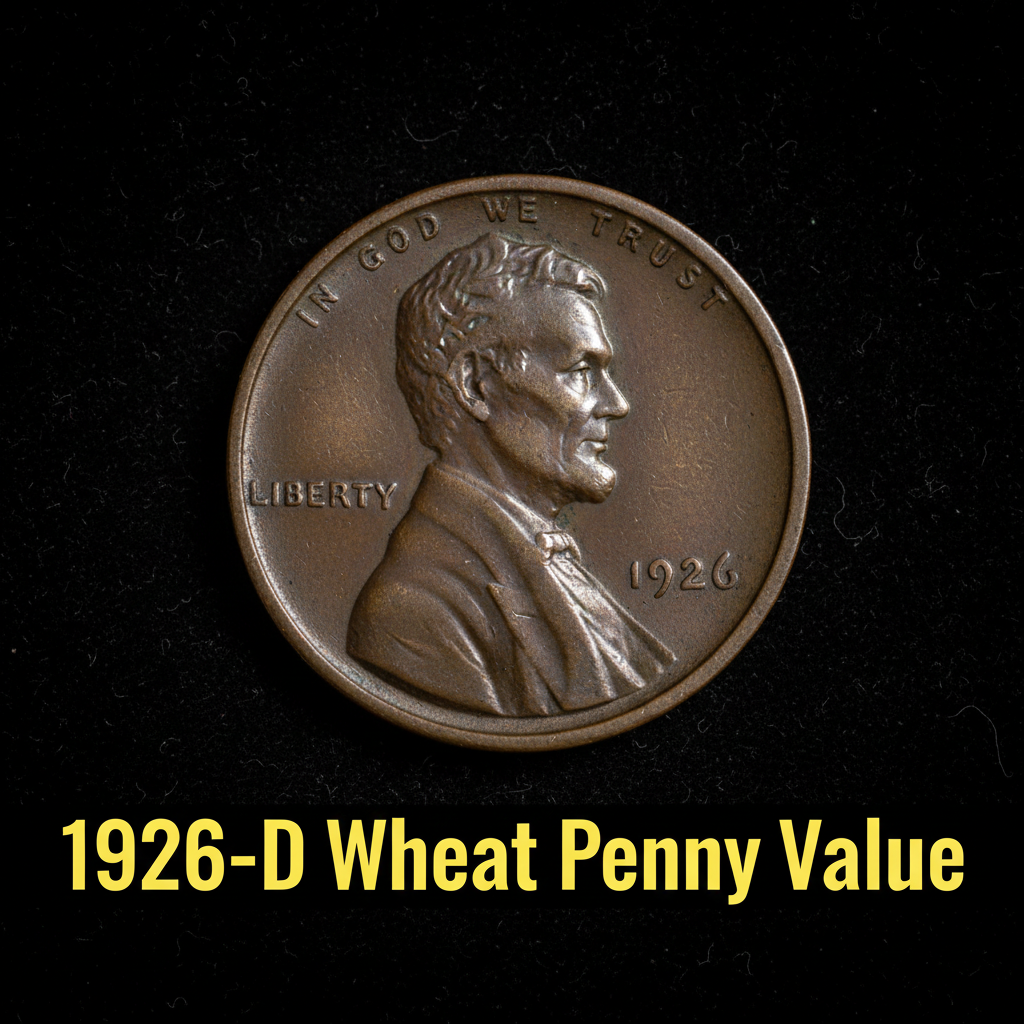
1926-D Wheat Penny Value How Much Is It Worth Today
The 1926-D Wheat Penny is worth anywhere from $1 in heavily worn condition to over $500 or more in high-grade mint state. If you found one in a coin jar or old collection, you might be holding something worth far more than a cent. Read on to find out exactly what yours could be worth.
What Makes the 1926-D Wheat Penny Special
The “D” mintmark on this penny means it was struck at the Denver Mint in 1926. That small letter makes a big difference in value. The Philadelphia Mint produced over 157 million Lincoln Wheat Pennies that year, but Denver struck only about 28 million — making the 1926-D a significantly scarcer coin. Fewer coins struck means fewer surviving examples today, especially in good condition. If you’re not sure which mint made your penny, flip it over and look just below the wheat stalks on the reverse side. A “D” means Denver, and that’s exactly what you want to see. Using a free coin identifier app on your phone can help you quickly confirm the mintmark and get an instant read on what you’re holding before you do any further research.
1926-D Wheat Penny Value by Grade
Coin grading is what separates a $2 coin from a $500 coin. The condition of your penny — how much wear it has, how sharp the details are, whether the luster is still present — determines most of its value. Grades run from Poor (P-1) on the low end to Mint State (MS-65 and above) for coins that never circulated. Here’s a general breakdown of what the 1926-D Wheat Penny is worth across different grades:
| Grade | Condition Description | Estimated Value |
|---|---|---|
| Good (G-4) | Heavy wear, flat design, date visible | $1 – $3 |
| Very Good (VG-8) | Moderate wear, some detail remains | $3 – $7 |
| Fine (F-12) | Even wear, clearer lettering and features | $8 – $15 |
| Very Fine (VF-20) | Light wear on high points only | $20 – $40 |
| Extremely Fine (EF-40) | Slight wear, sharp details throughout | $60 – $100 |
| Mint State (MS-63) | Uncirculated, minor contact marks | $200 – $350 |
| Mint State (MS-65+) | Gem uncirculated, full luster and strike | $500 – $1,000+ |
For a more detailed look at how auction results and certified coin sales track the 1926-D Wheat Penny price in mint red grades, it’s worth checking up-to-date market databases before you buy or sell.
Key Factors That Affect Your 1926-D Penny’s Worth
Beyond grade, a few other details can push the value of your 1926-D Wheat Penny higher or lower. Color is one of the biggest factors for uncirculated coins. Mint State pennies are classified as Red (RD), Red-Brown (RB), or Brown (BN). Red coins — those that have retained their original copper luster — are the most valuable. A brown uncirculated example might fetch $150, while the same coin in full red could sell for three times as much.
Strike quality also matters. Some 1926-D pennies were struck with worn dies, producing weakly detailed coins even when uncirculated. Sharp, well-struck examples are more desirable to collectors and command a premium at auction.
Cleaning is a major value killer. Many old pennies were polished by well-meaning owners over the decades. A cleaned coin loses significant collector value, even if it looks shiny and bright. If you’re unsure whether your coin has been cleaned, CoinKnow can help you identify surface issues and give you a better sense of what your coin is actually worth on the market today.
Where to Sell or Get Your 1926-D Penny Appraised
Once you know what grade you’re dealing with, you have several good options. Local coin shops offer quick appraisals and can make immediate cash offers. Online auction platforms like eBay have active markets for Wheat Pennies, and completed listings show you what real buyers have paid recently. For coins in Extremely Fine or better condition, submitting to a professional grading service like PCGS or NGC adds authentication and can significantly increase resale value.
You can also review a detailed breakdown of the 1926 penny’s value across all mint varieties to compare how the Denver coin stacks up against the Philadelphia and San Francisco issues from the same year. The comparison might surprise you. And if you want everything in one place — identification, grading guidance, and current price estimates — CoinKnow is a smart tool to have on your phone before you head to a dealer.
Tips for Storing and Protecting Your Wheat Penny
If you believe your 1926-D penny is in decent condition, don’t clean it. Don’t polish it. Don’t rub it with your fingers. The oils from your skin can damage the surface over time. Store it in a non-PVC coin flip or a hard plastic holder. Keep it away from humidity and direct sunlight. These small steps preserve the coin’s grade and protect its value. Many collectors have accidentally lowered the value of a potentially high-grade coin simply by handling it carelessly before getting it evaluated. CoinKnow includes storage tips and coin care advice alongside its valuation tools, making it a useful all-in-one resource for new and experienced collectors alike.
—
FAQ
Q: How do I know if my penny is a 1926-D or just a 1926?
A: Flip the coin over and look at the bottom of the reverse side, just below the wheat stalks and above the words ONE CENT. If you see a small “D,” it was made in Denver. No mintmark means Philadelphia.
Q: Is a worn 1926-D Wheat Penny still worth keeping?
A: Even in low grades, the 1926-D is worth more than face value — typically $1 to $5 depending on condition. It’s a scarcer issue than the Philadelphia version, so it’s worth holding onto or getting assessed before selling.
Q: What is the most valuable 1926-D Wheat Penny ever sold?
A: Top-grade examples in MS-66 Red have sold at major auction houses for well over $1,000. The finest known specimens in gem condition are rare and highly sought after by advanced Lincoln cent collectors.