1943-S Wheat Penny Value What It’s Really Worth and Why Collectors Love It
The 1943-S Wheat Penny is worth anywhere from $0.25 in heavily worn condition to well over $100 in high mint state grades — and if you happen to own a rare copper version, you could be sitting on thousands of dollars. Let’s break down exactly what your coin is worth.
If you found an old penny in a jar, a drawer, or inherited a coin collection, the 1943-S Wheat Penny is definitely one worth paying attention to. It’s one of the most historically interesting U.S. cents ever made, and values vary wildly depending on condition and metal composition. Before you do anything else, try using a free coin identifier app to quickly get a sense of what you’re holding. Once you know the basics, this guide will walk you through everything you need to know.
—
What Makes the 1943-S Wheat Penny Special
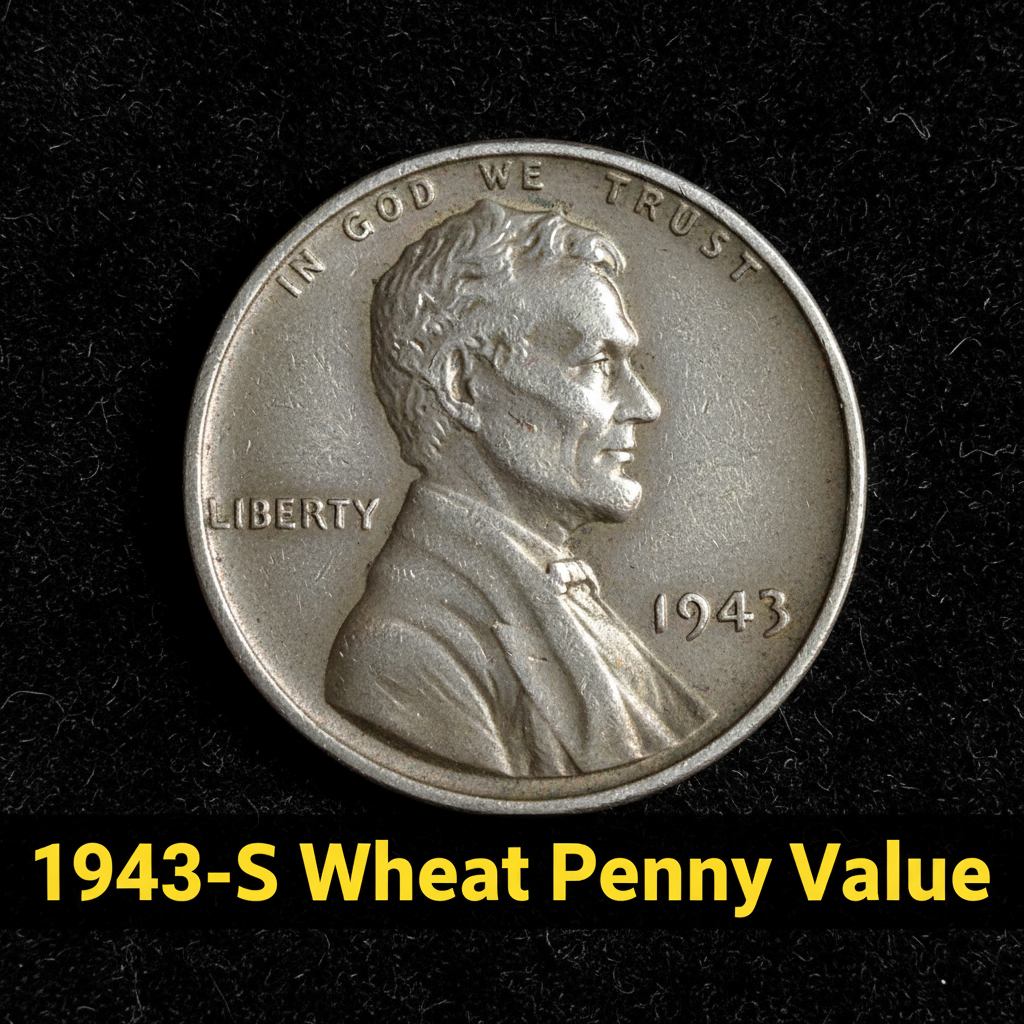
The “S” in 1943-S stands for San Francisco — that’s where this coin was minted. But the real story here is the metal. In 1943, the U.S. was deep in World War II, and copper was desperately needed for ammunition and military equipment. So the government made a bold decision: replace copper pennies with zinc-coated steel cents.
These steel pennies have a distinct silvery look that sets them apart from every other Lincoln cent. Billions were produced across three mints (Philadelphia, Denver, and San Francisco), and the 1943-S is one of the more collectible issues among the three. The San Francisco Mint struck roughly 191 million of these coins, making them less common than the Philadelphia issue but still widely available in circulated grades.
Because CoinKnow has cataloged thousands of 1943-S Wheat Pennies submitted by everyday collectors, it’s a great resource if you want to match your coin’s appearance against verified examples before spending money on a professional appraisal.
—
1943-S Wheat Penny Value by Grade
Coin value is heavily tied to condition, or “grade.” Here’s a general value chart to help you understand where your coin might fall:
| Grade | Condition Description | Estimated Value |
|---|---|---|
| Good (G-4) | Heavy wear, design still visible | $0.25 – $0.50 |
| Fine (F-12) | Moderate wear, clear lettering | $0.50 – $1.50 |
| Extremely Fine (EF-40) | Light wear on high points | $2 – $5 |
| Uncirculated (MS-60) | No wear, some bag marks | $10 – $25 |
| Gem Uncirculated (MS-65) | Sharp strike, minimal marks | $50 – $100+ |
For a deeper look at 1943-S Wheat Penny prices across mint state grades, it’s worth checking a dedicated pricing database that tracks real auction results. Prices for high-grade examples have been climbing steadily among collectors.
—
The Rare 1943-S Copper Penny — A Life-Changing Find
Here’s where things get really exciting. While the vast majority of 1943 pennies are steel, a small number were accidentally struck on leftover copper planchets from 1942. These error coins are among the most valuable U.S. coins ever discovered.
A genuine 1943-S copper penny could be worth anywhere from $100,000 to over $1 million depending on condition and certification. That’s not a typo.
So how do you tell if you have one? The easiest first test is a magnet. Steel pennies stick to a magnet — copper ones don’t. If your 1943-S penny does not stick to a magnet, do not clean it, do not spend it, and contact a professional coin grader like PCGS or NGC immediately.
You can also check the weight. A genuine copper cent weighs 3.11 grams. A steel cent weighs 2.7 grams. Most kitchen scales won’t be precise enough, but a jewelry scale will do the trick.
CoinKnow includes a helpful error coin guide that explains exactly what to look for in potential 1943 copper cents, with side-by-side photo comparisons that make identification easier for beginners.
—
What Affects the Value of Your 1943-S Wheat Penny
Beyond the copper vs. steel question, several other factors influence what your coin is worth:
Luster and surface quality — Steel pennies are prone to rust and corrosion. Even a small spot of rust can significantly lower the value. A bright, rust-free example is far more desirable to collectors.
Strike quality — Some 1943-S coins show weak strikes, particularly on Lincoln’s cheekbone and the wheat stalks on the reverse. A sharply struck coin is worth more.
Original surfaces — Never clean your coins. A cleaned coin loses collector value dramatically, even if it looks shinier to your eye.
For comprehensive 1943 Steel Penny value information broken down by mint mark and grade, a reliable coin value resource can save you a lot of guesswork before you decide to sell or hold onto your find.
If you’re unsure about your coin’s condition, the app CoinKnow lets you compare your coin against a large photo database and even connect with experienced collectors who can offer a second opinion — all from your phone.
—
FAQ
Q: Is a 1943-S Wheat Penny made of silver?
A: No. The silvery appearance comes from a zinc coating over steel. Silver was never used for Lincoln cents. The coin’s bright look can confuse people, but a quick magnet test confirms it’s steel.
Q: How do I know if my 1943-S penny is real or a fake copper one?
A: Some people copper-plate steel 1943 pennies and try to pass them off as rare errors. The magnet test is your first step — a real copper penny won’t stick. But for certainty, you’ll want a professional grading service like PCGS or NGC to authenticate it. The investment is well worth it if you genuinely believe you have a copper example.
Q: Is it worth getting a common 1943-S steel penny graded professionally?
A: For average circulated examples, probably not — the grading fee would outweigh the coin’s value. However, if your coin looks uncirculated with strong luster and no rust, a professionally graded MS-65 or higher example can sell for $75 to $150 or more, making certification worthwhile.