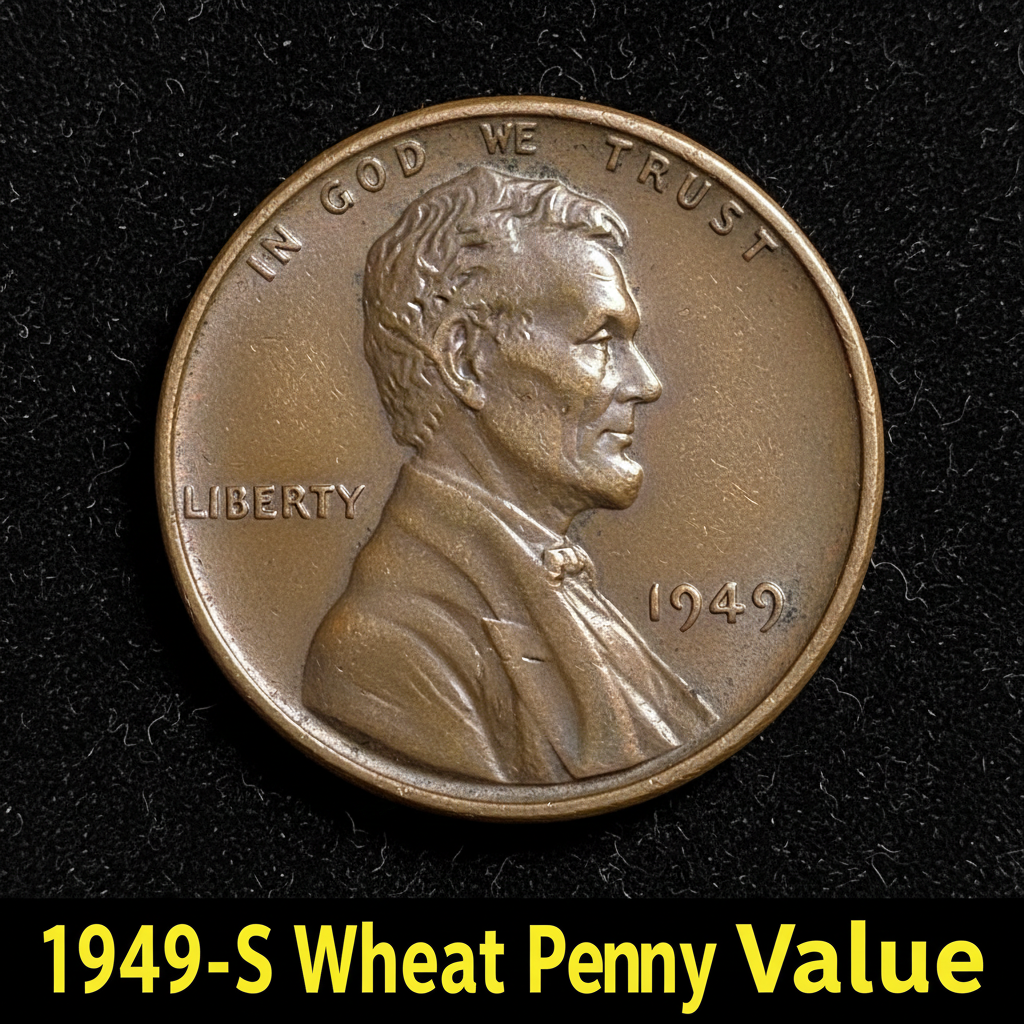
1949-S Wheat Penny Value Guide How Much Is Your San Francisco Cent Worth
The 1949-S Wheat Penny is worth anywhere from $0.10 in heavily worn condition to over $100 or more in gem mint state — and certain high-grade examples have sold for even more at auction. If you just found one of these old Lincoln cents in a jar, a drawer, or an inherited coin collection, you’re in the right place to find out exactly what it’s worth.
What Is the 1949-S Wheat Penny?
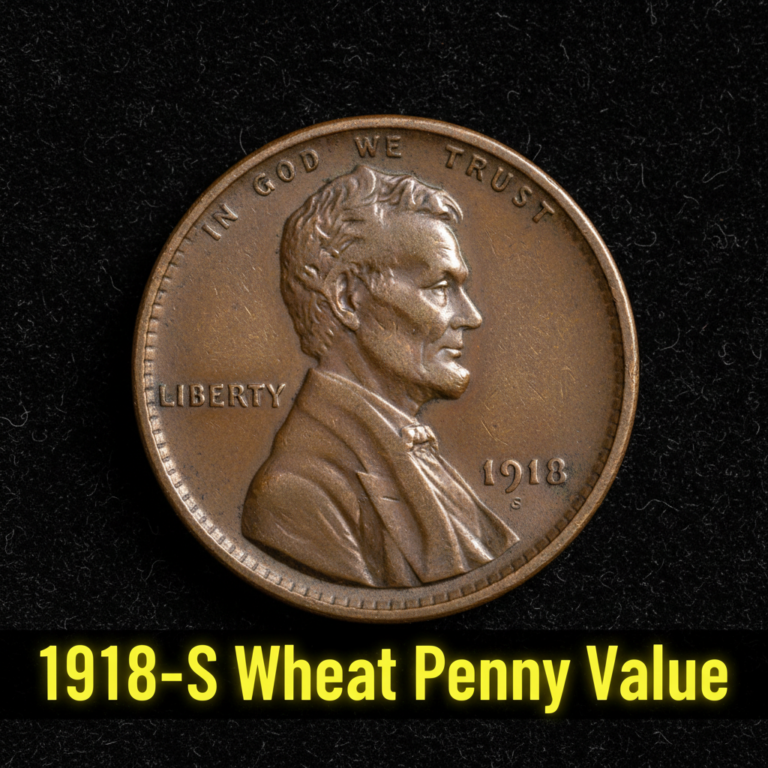
The 1949-S Wheat Penny is a Lincoln cent minted at the San Francisco Mint in 1949. The “S” mintmark appears on the obverse (front) of the coin, just below the date. During this era, the U.S. Mint produced Lincoln cents at three facilities: Philadelphia (no mintmark), Denver (D), and San Francisco (S). The San Francisco Mint struck 64,290,000 of these coins in 1949 — a relatively high mintage, which is why most circulated examples are affordable today.
That said, condition is everything in coin collecting. A well-worn 1949-S might only fetch a few cents above face value, while a coin that was never circulated and preserved in pristine condition can command serious money from collectors. If you’re not sure whether your coin has collector value, using a free coin identifier app can help you quickly get a starting point on grade and value right from your phone.
1949-S Wheat Penny Value by Grade
Like all coins, the 1949-S Wheat Penny is graded on a scale from Poor (P-1) to Perfect Mint State (MS-70). The higher the grade, the more the coin is worth. Most coins found in circulation will fall somewhere between Good and Very Fine condition. For a detailed breakdown of current 1949-S Wheat Penny prices in mint red condition, certified grading data and recent auction results are your best resource.
Here’s a general value guide based on grade:
| Grade | Description | Estimated Value |
|---|---|---|
| Good (G-4) | Heavy wear, outlines visible | $0.10 – $0.25 |
| Very Good (VG-8) | Moderate wear, details clearer | $0.25 – $0.50 |
| Fine (F-12) | Moderate wear, some detail | $0.50 – $1.00 |
| Very Fine (VF-20) | Light-moderate wear | $1.00 – $2.00 |
| Extremely Fine (EF-40) | Light wear on high points only | $2.00 – $4.00 |
| About Uncirculated (AU-55) | Slight wear, most luster remains | $4.00 – $8.00 |
| MS-63 Red | Uncirculated, original red color | $15 – $35 |
| MS-65 Red | Gem uncirculated, bright red | $40 – $75 |
| MS-67 Red | Superb gem, top population | $100 – $300+ |
Error Coins and Special Varieties Worth More
Not all 1949-S Wheat Pennies are created equal. Some examples feature minting errors or die varieties that make them significantly more valuable to specialized collectors. The most notable variety to look for is a repunched mintmark (RPM), where the “S” mintmark was stamped more than once at a slightly different angle, leaving a doubled or shifted impression. These RPM varieties can be worth several times more than a standard example in the same grade.
Other errors to watch for include off-center strikes, clipped planchets, and die cracks. If your coin looks a little “off” in some way — maybe the design isn’t centered, or there’s an unusual mark in the field — it might be worth a second look. For a comprehensive overview of 1949 penny values across all mintmarks and error types, cross-referencing multiple sources will give you the most accurate picture.
CoinKnow is a great tool for identifying potential varieties and errors. Simply scan your coin with the app and it can flag unusual characteristics that might indicate added value.
How to Tell If Your 1949-S Penny Is Worth Grading
If your 1949-S Wheat Penny shows strong detail in Lincoln’s hair and beard, the wheat stalks on the reverse are fully defined, and the coin has a reddish or reddish-brown color rather than dull gray or dark brown, it may be worth having professionally graded. The two main grading services in the U.S. are PCGS (Professional Coin Grading Service) and NGC (Numismatic Guaranty Corporation). Getting a coin graded costs money — typically $20 to $50 per coin at minimum — so it usually only makes sense for coins that appear to be in Mint State condition.
A quick and easy first step is to use CoinKnow to get an instant AI-assisted grade estimate before spending money on professional services. The app is designed for everyday people, not just seasoned collectors, so you don’t need any prior experience to get useful results.
Where to Sell Your 1949-S Wheat Penny
If you’ve decided your coin has value and you’re ready to sell, you have several good options. eBay is one of the most popular platforms for selling individual coins because it connects you directly with collectors worldwide. Check “sold” listings first to see what similar 1949-S Wheat Pennies have actually sold for — not just what sellers are asking. Coin shows and local coin dealers are also reliable options, especially for graded coins. Heritage Auctions and Stack’s Bowers are top-tier auction houses worth considering for high-grade or error examples worth $100 or more.
For a quick and convenient way to track values before listing your coin, CoinKnow lets you monitor recent sale prices and market trends so you never sell for less than your coin is worth.
Frequently Asked Questions
Q: How do I know if my penny is a 1949-S Wheat Penny?
A: Look at the front (obverse) of the coin. You should see the date “1949” and a small “S” mintmark just below and to the right of the date. On the reverse, there should be two wheat stalks framing the words “ONE CENT” — this is the classic Wheat Penny design used from 1909 to 1958.
Q: Is a 1949-S Wheat Penny made of silver?
A: No. The 1949-S Wheat Penny is made of 95% copper and 5% tin and zinc. It contains no silver. The coin’s reddish color when uncirculated comes from its high copper content. Silver Lincoln cents were only produced briefly during World War II in 1943, and those were actually steel cents plated in zinc.
Q: What makes some 1949-S Wheat Pennies worth hundreds of dollars?
A: The biggest factors are grade and color. A coin graded MS-67 Red by PCGS or NGC — meaning it’s virtually perfect and still shows its original bright red copper color — is extremely rare and highly sought after by collectors. Additionally, error coins like repunched mintmark varieties or off-center strikes can fetch premiums well above standard values regardless of grade.