1957-D Wheat Penny Value Guide How Much Is It Worth Today
The 1957-D Wheat Penny is worth anywhere from $0.10 in heavily worn condition to over $25 or more in pristine mint state. If you’ve found one of these classic Lincoln cents in an old jar or inherited coin collection, you’re in the right place to find out exactly what it’s worth.
Most people don’t realize how many of these old copper pennies are still floating around in sock drawers, piggy banks, and estate sales. The 1957-D Wheat Penny was minted in Denver and carries the “D” mint mark just below the date on the obverse side. Before you spend it or toss it aside, it’s worth taking a closer look. Using a free coin identifier app can help you quickly figure out what you’ve got and whether it’s worth holding onto.
What Is the 1957-D Wheat Penny?
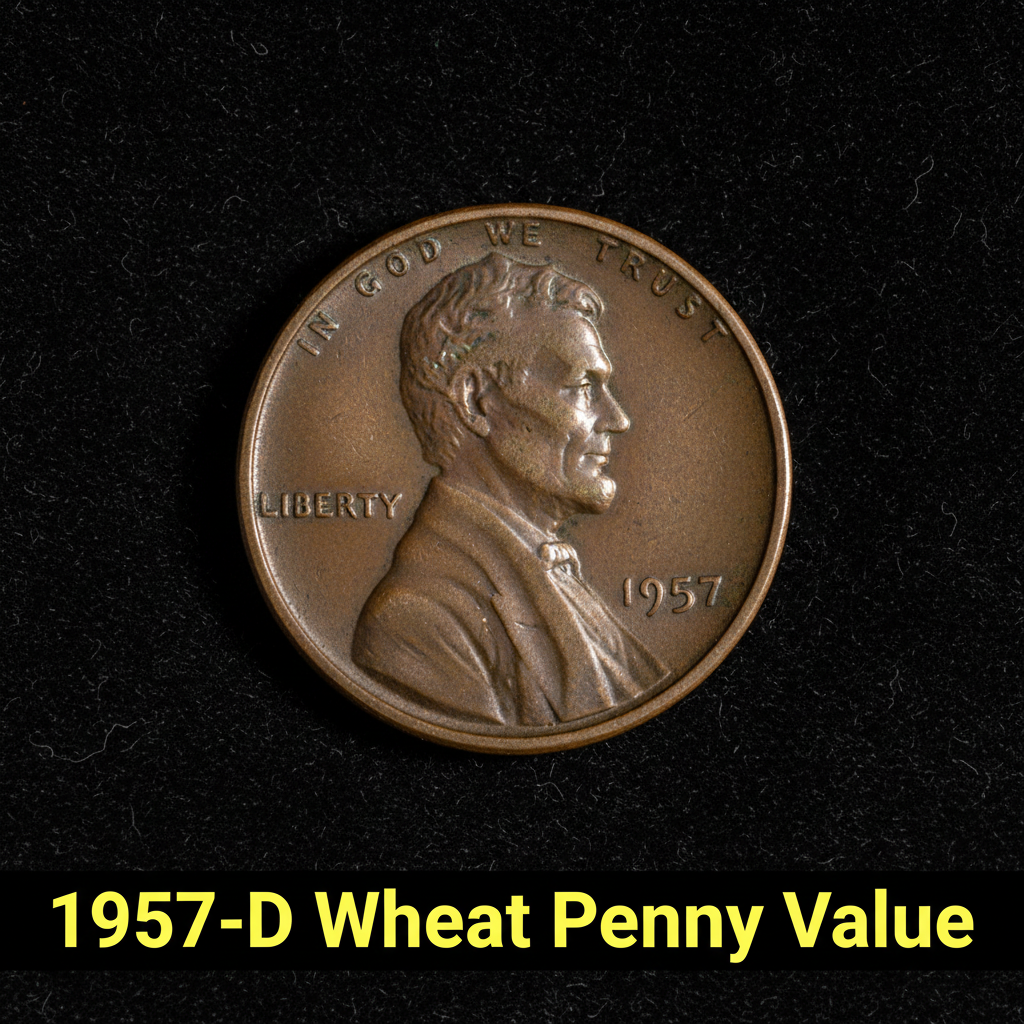
The 1957-D Wheat Penny is part of the Lincoln Wheat Cent series, which was produced from 1909 to 1958. Designed by Victor David Brenner, these coins feature Abraham Lincoln on the front and two wheat stalks on the reverse — which is how they earned the nickname “Wheat Penny.” The “D” on your coin means it was struck at the Denver Mint.
In 1957, the Denver Mint produced an impressive 282,540,000 of these pennies, making them one of the more common issues in the Wheat Penny series. Because so many were made, they’re not considered rare coins. However, condition plays a huge role in value, and high-grade examples can still fetch solid prices among collectors. The coin is made of 95% copper and 5% tin and zinc, giving it that warm reddish-brown tone that collectors love. Understanding what you have starts with examining the coin’s condition, or “grade,” which we’ll cover next.
1957-D Wheat Penny Value by Grade
The value of a 1957-D Wheat Penny depends heavily on its condition. Coin graders use a scale from 1 to 70, with circulated coins falling in the lower ranges and uncirculated or mint-state coins scoring higher. Here’s a general breakdown of what you can expect:
| Condition | Grade | Estimated Value |
|---|---|---|
| Good (heavily worn) | G-4 | $0.10 – $0.25 |
| Fine | F-12 | $0.25 – $0.50 |
| Extremely Fine | EF-40 | $0.75 – $1.50 |
| About Uncirculated | AU-55 | $1.50 – $3.00 |
| Mint State Red (MS-63) | MS-63 RD | $4 – $10 |
| Gem Mint State Red (MS-65) | MS-65 RD | $15 – $30+ |
For a more detailed look at certified mint-state 1957-D Wheat Penny prices across different MS grades, it’s worth comparing recent auction results to understand market trends before buying or selling.
What Makes a 1957-D Wheat Penny More Valuable?
While most 1957-D Wheat Pennies are common, a few factors can dramatically increase their value. The biggest one is color. Coin graders categorize copper coins as Red (RD), Red-Brown (RB), or Brown (BN). A coin that retains its original bright red copper luster — known as “Full Red” — is significantly more desirable and valuable than one that has toned to brown over the decades.
Strike quality also matters. A sharply struck coin with clear details on Lincoln’s portrait and the wheat stalks on the reverse will always command more interest from collectors. Look closely at Lincoln’s cheekbones and the fine lines in the wheat design — these are the first areas to show wear.
Errors and varieties are another story entirely. If your 1957-D Wheat Penny has a doubled die, off-center strike, or other visible mint error, it could be worth considerably more than a standard example. Some error coins from this era sell for hundreds of dollars. CoinKnow is a great tool for identifying these types of errors quickly — just scan your coin and let the app do the heavy lifting.
How to Check the Value of Your 1957-D Wheat Penny
If you’re new to coin collecting and not sure where to start, don’t worry — checking your coin’s value doesn’t require being an expert. Start by examining the coin under good lighting, preferably with a magnifying glass. Look for any unusual features, doubling in the lettering, or signs of a mint error.
Next, compare your coin’s condition honestly to a grading guide. If the details on Lincoln’s face are sharp and the coin has little to no wear, you may have an uncirculated example worth more than most. For a comprehensive breakdown of the full 1957 penny value including both Philadelphia and Denver mint issues, checking a reliable coin value database is always a smart move.
Finally, consider getting high-grade coins professionally graded by PCGS or NGC. A certified MS-65 or higher coin will sell for much more than an ungraded example, especially to serious collectors. And if you want an instant estimate on the go, CoinKnow lets you scan coins with your phone camera and get value estimates in seconds — perfect for everyday Americans who just found something interesting in grandma’s coin box.
Should You Sell, Hold, or Get It Graded?
For most circulated 1957-D Wheat Pennies, the honest answer is that they’re worth more as conversation pieces or starter collection items than as investments. A worn example might bring 10 to 25 cents at a coin show. But if your coin looks nearly untouched — bright, red, with no scratches or spots — it’s worth having a closer look before you do anything.
If you suspect you have a high-grade or error coin, getting it professionally slabbed (encapsulated and graded) is the best way to protect and maximize its value. Dealers and auction houses trust certified grades, and you’ll get better prices. Whether you’re selling at a local coin show, listing on eBay, or using CoinKnow to connect with buyers, knowing your coin’s grade gives you the upper hand in any transaction.
FAQ
Q: How do I know if my 1957-D Wheat Penny is valuable?
A: The main factors are condition, color, and whether it has any mint errors. A coin with bright red luster and no wear (MS-65 or higher) can be worth $15 to $30 or more. If it looks unusual — doubled letters, off-center image — it could be an error coin worth researching further.
Q: Where is the mint mark on a 1957-D Wheat Penny?
A: The “D” mint mark is located on the obverse (front) of the coin, just below the date on the right side. This tells you the coin was made at the Denver Mint in Colorado.
Q: Is it worth getting a 1957-D Wheat Penny graded professionally?
A: If your coin appears to be in uncirculated condition with original red color, yes — professional grading from PCGS or NGC can significantly increase its marketability and selling price. For common circulated examples, the grading fee usually isn’t worth it.