1960 Large Date Lincoln Penny Value and What It Could Be Worth Today
The 1960 Large Date Lincoln Penny is worth anywhere from a few cents in heavily worn condition to over $20 or more in pristine mint state, with rare high-grade examples occasionally fetching $50 or higher at auction. If you found one of these coins in an old jar or coin roll, you might be sitting on more than just a penny.
What Makes the 1960 Large Date Different from the Small Date?
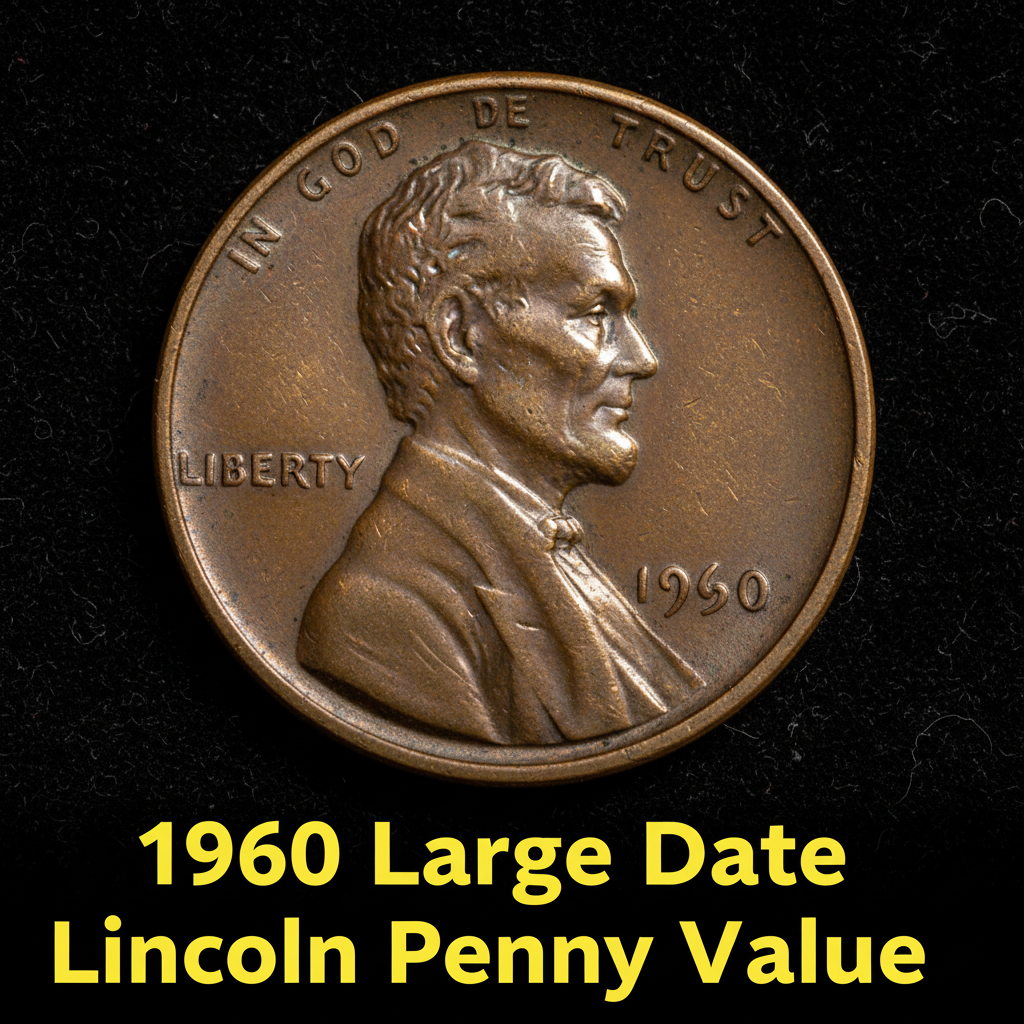
The year 1960 is actually one of the more interesting years in Lincoln cent history because the U.S. Mint produced two distinct varieties: the Large Date and the Small Date. The difference comes down to the size and style of the numerals stamped on the coin. On the Large Date version, the “0” in 1960 appears larger and more rounded, and the numbers are generally bolder. On the Small Date, the digits are noticeably smaller and thinner.
This might sound like a tiny distinction, but it matters a lot to collectors. The Large Date is actually the more common of the two varieties, which means it doesn’t command quite the same premium as the rarer Small Date. Still, high-quality examples of the 1960 Large Date Lincoln Penny are very collectible, and knowing which version you have is the first step to understanding its value.
If you’re not sure which variety you have, a magnifying glass can help. You can also use a free coin identifier app to scan your coin and get a quick read on the variety and estimated value — a great option for beginners who don’t want to dig through reference books.
1960 Large Date Lincoln Penny Value by Grade and Mint Mark
The value of your 1960 Large Date penny depends heavily on two things: its condition (grade) and where it was minted. Coins from Philadelphia carry no mint mark, while Denver coins show a small “D” on the obverse beneath the date.
Here’s a breakdown of approximate values:
| Coin | Good (G-4) | Fine (F-12) | MS-63 Red | MS-65 Red |
|---|---|---|---|---|
| 1960 Large Date (Philadelphia) | $0.05 | $0.10 | $2–$5 | $15–$25 |
| 1960-D Large Date (Denver) | $0.05 | $0.10 | $2–$5 | $12–$20 |
For the most up-to-date pricing across all grades, you can check the current 1960 Large Date Lincoln Penny price data by grade and mint mark, which reflects recent auction results and dealer pricing.
Understanding Coin Grades and Why Condition Matters So Much
If you’re new to coin collecting, the grading system can feel overwhelming at first. But the basics are simple: the better shape your coin is in, the more it’s worth. A coin that’s been sitting in a piggy bank for decades and has scratches, dullness, or worn details will grade somewhere in the lower ranges — Good, Fine, or Very Fine. A coin that was never circulated and still has its original copper luster can grade Mint State (MS) and is worth significantly more.
For the 1960 Large Date cent specifically, the biggest jumps in value happen at the top of the scale. An MS-65 Red coin — meaning it looks nearly perfect and still has bright red copper color — can be worth 10 to 20 times more than an MS-63 example. That original “Red” designation matters because copper coins naturally tone to a brown color over time, and red examples are rarer and more desirable.
CoinKnow is a popular tool among casual collectors to help grade coins at home before sending them off to a professional grading service. It walks you through what details to look for and gives you a realistic value estimate based on current market data.
Errors and Special Varieties Worth Knowing About
Beyond the Large Date vs. Small Date distinction, collectors also watch for error coins from 1960. Doubled die errors — where the design appears slightly doubled or blurred due to a die misalignment during production — are the most sought-after errors for this year. A 1960 Large Date doubled die obverse, for example, can be worth considerably more than a standard example even in circulated condition.
Other errors to look for include off-center strikes, where the design is not centered on the planchet, and repunched mint marks on the Denver issue. These varieties are rare but not impossible to find in old collections or coin rolls.
For a more complete overview of what your coin could be worth across different scenarios, this detailed 1960 penny value guide covering all varieties and conditions is a great resource to bookmark. And if you want to identify errors quickly, CoinKnow has a built-in error detection feature that compares your coin photos against a known database of varieties.
FAQ
Q: How do I tell if my 1960 penny is a Large Date or Small Date?
A: Look at the “0” at the end of the date. On the Large Date, the numeral is bigger and more rounded. On the Small Date, all four digits are smaller and thinner. A magnifying glass or a coin app like CoinKnow makes this much easier to see clearly.
Q: Is the 1960 Large Date penny worth more than face value?
A: In worn, circulated condition, most examples are worth only a few cents above face value. However, in uncirculated mint state with original red color, values can range from $10 to $50 or more depending on the grade.
Q: Where is the mint mark on a 1960 Lincoln penny?
A: The mint mark is located on the obverse (front) of the coin, just below the date on the right side. A “D” means it was struck at the Denver Mint. No mint mark means it came from the Philadelphia Mint.