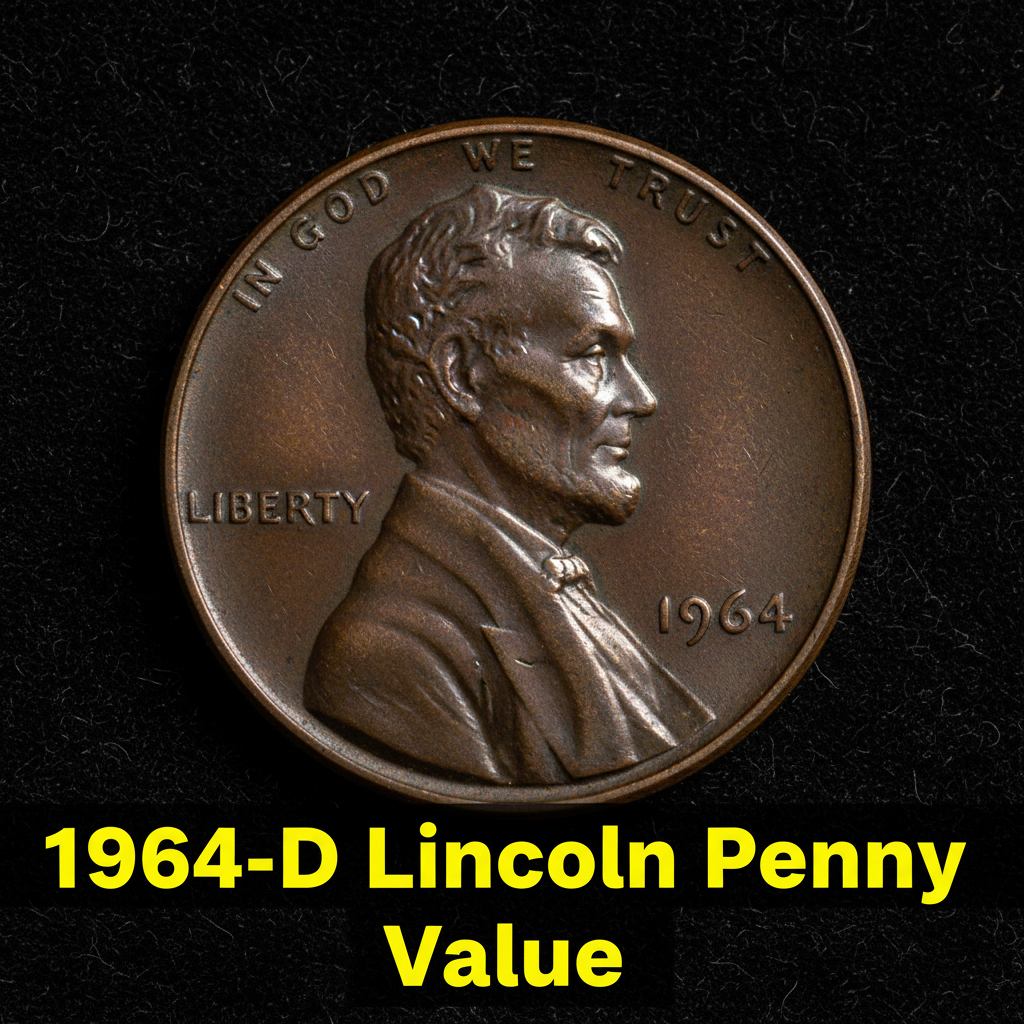
1964-D Lincoln Penny Value What It’s Worth and Why Collectors Still Want It
The 1964-D Lincoln Penny is worth anywhere from a few cents in heavily worn condition to over $15 or more in pristine uncirculated grades — and rare error coins from this year can fetch hundreds of dollars. If you found one of these pennies in a jar or old coin roll, you might be sitting on more than pocket change.
If you’re just getting started identifying old coins, a free coin identifier app can help you quickly figure out what you’ve got before diving deeper into values. Once you’ve confirmed your coin, read on — because the 1964-D Lincoln Penny has a surprisingly interesting story behind its value.
Background on the 1964-D Lincoln Penny
The “D” in 1964-D simply means the coin was minted at the Denver Mint. Denver was one of two facilities producing Lincoln cents that year — the other being Philadelphia. The Denver Mint struck an enormous number of pennies in 1964: over 3.7 billion coins. Yes, billion. That’s one of the highest mintage figures in U.S. penny history up to that point.
Because of this massive production run, most 1964-D Lincoln pennies that turn up today are worth only face value or just slightly above it in circulated grades. However, quantity doesn’t tell the whole story. Condition is everything when it comes to coin values, and a perfectly preserved example graded MS-65 Red or higher can command real money from collectors. The Lincoln Memorial design, introduced in 1959, was still relatively new in 1964, and high-grade examples in original red copper luster are genuinely sought after.
How Much Is Your 1964-D Lincoln Penny Worth?
Here’s a straightforward breakdown of what you can expect based on condition:
| Grade / Condition | Estimated Value |
|---|---|
| Good (G-4) | $0.05 – $0.10 |
| Fine (F-12) | $0.10 – $0.25 |
| Extremely Fine (EF-40) | $0.25 – $0.50 |
| Mint State 63 (MS-63 RD) | $3 – $6 |
| Mint State 65 (MS-65 RD) | $8 – $15 |
| Mint State 67 (MS-67 RD) | $100+ |
For a more detailed look at certified 1964-D Lincoln Penny prices across all Mint State grades, professional grading data can help you benchmark what your coin is truly worth in today’s market.
Want a quick estimate on your phone? CoinKnow is a highly rated coin valuation app that lets you scan your pennies and get instant value estimates. It’s a great first step before consulting a dealer.
What Makes a 1964-D Penny More Valuable
Not all 1964-D pennies are created equal. Several factors can push the value of your coin well above the average:
Color designation: Lincoln cents in uncirculated condition are graded as Red (RD), Red-Brown (RB), or Brown (BN). Red coins — those that have retained their original bright copper color — are the most desirable and valuable. A coin that has toned to brown is worth significantly less than a fully red example in the same grade.
Strike quality and eye appeal: Even within the same grade, some coins just look better. Sharp strikes with strong details on Lincoln’s portrait and the Lincoln Memorial reverse attract premium prices.
Error coins: This is where things get really interesting. Some 1964-D pennies carry dramatic errors — doubled dies, off-center strikes, or repunched mint marks. These error coins can sell for anywhere from $20 to several hundred dollars depending on the severity and visibility of the error.
Always examine your coin under good lighting and a loupe before deciding it’s just a common cent.
Errors on the 1964-D Lincoln Penny Worth Knowing
Error coins from 1964-D are not common, but they do exist and are actively hunted by collectors. The most notable errors include:
Doubled Die Obverse (DDO): Look closely at the date and lettering on the front of the coin. If you see doubling — letters or numbers that appear slightly duplicated — you may have a DDO. These can be worth $25 to $150 or more.
Repunched Mint Mark (RPM): On some 1964-D pennies, the “D” mint mark was punched into the die more than once, leaving a ghost or shadow of a second “D” visible. Collectors pay premiums for strong RPM examples.
Off-Center Strikes: If Lincoln’s portrait or the date appears shifted and there’s a blank area of the coin where the design should be, you have an off-center strike. Values vary widely based on how dramatic the shift is.
You can explore a full breakdown of 1964 Lincoln Penny values including error varieties to compare your coin against known examples. And if you want to track multiple coins in your collection at once, CoinKnow makes it easy to catalog and value your finds all in one place.
How to Check Your 1964-D Penny at Home
You don’t need to be an expert to do a basic evaluation. Start with these steps:
1. Don’t clean your coin. Cleaning removes original surface and destroys value. Even if it looks dirty, leave it alone.
2. Check the mint mark. The “D” should appear just below the date on the obverse side.
3. Look at the color. Is it still bright and coppery, or has it gone brown?
4. Examine for errors. Use a 5x or 10x magnifying loupe to look at the date, lettering, and mint mark.
5. Grade it honestly. Compare your coin to photos of known grades online.
For most people, a worn 1964-D penny is worth a few cents. But if yours still has that original red shine and sharp details, it’s worth looking into further — and CoinKnow can help you get a fast, reliable estimate right from your smartphone.
—
Frequently Asked Questions
Q: Is the 1964-D penny rare?
A: No, the 1964-D Lincoln Penny is not rare — over 3.7 billion were minted. However, finding one in high uncirculated grades with original red color is uncommon, and error varieties are genuinely scarce.
Q: What does the “D” mean on a 1964 penny?
A: The “D” mint mark stands for Denver, indicating the coin was produced at the Denver Mint. Pennies without a mint mark from 1964 were made at the Philadelphia Mint.
Q: Should I get my 1964-D penny professionally graded?
A: It depends on the coin. If yours appears to be in full uncirculated condition with strong red color, professional grading by PCGS or NGC could be worth the cost. For worn circulated examples, it generally isn’t worth the grading fee.