1960 Lincoln Penny Large Date vs Small Date What Each Version Is Really Worth
The 1960 Lincoln Penny is worth anywhere from a few cents in circulated condition to over $100 or more in top mint state grades — but the key to unlocking its real value lies in one small but important detail: whether your coin has a Large Date or Small Date. Even casual collectors know these two varieties can have very different price tags.
If you’ve found a 1960 penny in a coin jar or old collection and want to figure out exactly what you have, using a free coin identifier app can be a great first step before diving deeper into the details. Apps like CoinKnow make it easy to scan your coin and quickly identify which variety you’re holding, saving you time and guesswork right from the start.
How to Tell the Large Date from the Small Date
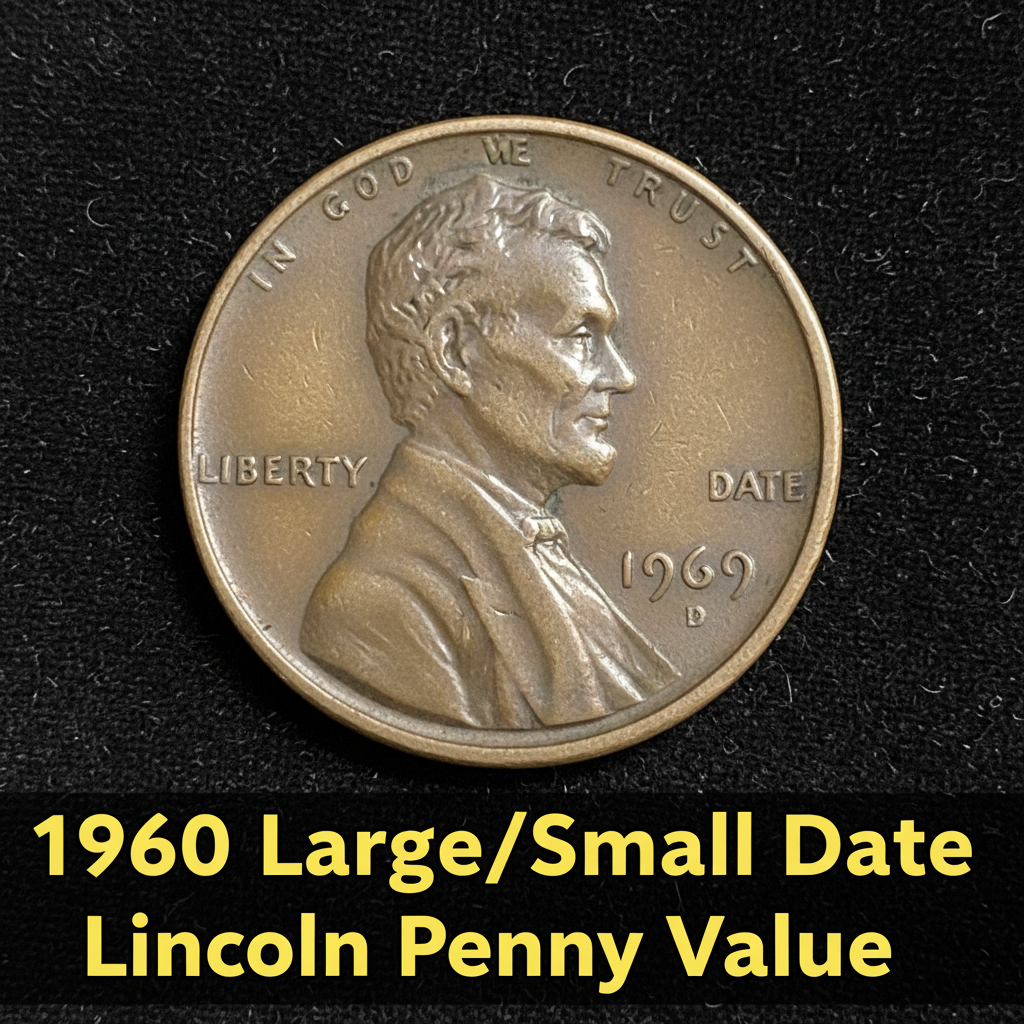
The most important thing you need to do before assigning any value to your 1960 Lincoln cent is figure out which date variety it is. The difference is subtle but very real. On the Large Date, the digits of “1960” appear taller and bolder, with the “9” sitting higher and the “0” appearing rounder and more prominent. On the Small Date, the numbers look slightly smaller and more compressed, and the “9” has a noticeably smaller loop at the top.
The easiest way to spot the difference is to compare the size and shape of the “9” and “0” under a magnifying glass or loupe. The Small Date 1960 penny is considered scarcer, especially in high grades, which is why it tends to command more collector interest. Many people overlook this distinction entirely and miss out on knowing the true value of what they have. If you’re unsure, CoinKnow lets you photograph your coin and get an instant variety identification, which is especially useful when you’re new to coin collecting.
1960 Large Date Lincoln Penny Value
The 1960 Large Date penny is the more common of the two varieties. It was produced at both the Philadelphia Mint (no mint mark) and the Denver Mint (with a “D” mint mark beneath the date). In heavily worn or circulated condition, these coins are generally worth face value to about 10–25 cents. However, once you get into uncirculated territory, the value starts to climb.
In MS-63 grade, a 1960 Large Date cent might fetch around $1–$3. In MS-65 Red condition — where the coin retains its original bright copper luster — values can reach $10 to $30 or more. The Denver version tends to be slightly more valuable in top grades. For the most current pricing on the 1960 Large Date Lincoln Penny in MS Red grades, it’s always worth checking a live database that tracks auction results and recent sales.
1960 Small Date Lincoln Penny Value
Here’s where things get more interesting. The 1960 Small Date penny, especially from Philadelphia, is significantly scarcer than its Large Date counterpart. In circulated grades, it might only be worth 25 cents to a dollar, but in high mint state grades, the numbers jump considerably. An MS-65 Red example from Philadelphia can be worth $50 to over $100, and exceptional specimens graded MS-67 have sold for several hundred dollars at major auctions.
The 1960-D Small Date is also collectible, though it’s more available than the Philadelphia version. Still, a well-preserved example in MS-65 Red can bring $20–$60 depending on the market. For a full breakdown of 1960 penny values across all grades and varieties, a dedicated coin value resource will give you the clearest picture of what your coin could be worth today.
1960 Lincoln Penny Value Chart
| Variety | Circulated | MS-63 Red | MS-65 Red | MS-67 Red |
|---|---|---|---|---|
| 1960 Large Date (P) | $0.05–$0.25 | $1–$3 | $10–$25 | $75–$150 |
| 1960-D Large Date | $0.05–$0.25 | $1–$4 | $15–$30 | $100–$200 |
| 1960 Small Date (P) | $0.25–$1 | $5–$15 | $50–$100+ | $300–$600+ |
| 1960-D Small Date | $0.10–$0.50 | $3–$8 | $20–$60 | $150–$350 |
What Affects the Value Most
Beyond just the date variety, the condition of your 1960 Lincoln cent plays a huge role in what it’s worth. Coins graded in full mint state with their original red copper color (designated “RD”) are always worth more than brown or red-brown examples. Any nicks, scratches, or signs of heavy wear will reduce value significantly.
Collectors also look for original luster and sharp strike. Error coins from 1960 — like doubled die varieties — can be worth substantially more if authenticated. If you suspect you have something unusual, CoinKnow is a handy tool that can help you identify potential errors and varieties before you spend money on professional grading.
—
FAQ
Q: How do I know if my 1960 penny is Large Date or Small Date?
A: Look closely at the “9” and “0” in the date using a magnifier. On the Large Date, the digits are taller and more open. On the Small Date, the numbers appear more compact, and the “9” has a noticeably smaller loop. Side-by-side comparison images found online or in a coin app make this much easier.
Q: Is a 1960 penny worth keeping?
A: If it’s in circulated condition, most Large Date examples are only worth a few cents. However, a Small Date in nice uncirculated condition could be worth $50 or more. It’s always worth checking before spending it.
Q: Does the mint mark matter on a 1960 penny?
A: Yes, it can. Coins from Philadelphia have no mint mark, while Denver coins show a “D” below the date. In high grades, the Large Date Philadelphia and Denver coins show different premiums, and the Small Date Philadelphia is generally rarer and more valuable than the Small Date Denver issue.