1900 Liberty Nickel Value What It’s Really Worth Today
The 1900 Liberty Nickel is worth anywhere from $2 in heavily worn condition to over $100 or more in uncirculated mint state grades, with some exceptional examples fetching even higher prices at auction. If you found one of these coins in an old jar or inherited it from a family member, you’re in the right place to find out exactly what it’s worth.
Getting Started: What Is the 1900 Liberty Nickel?
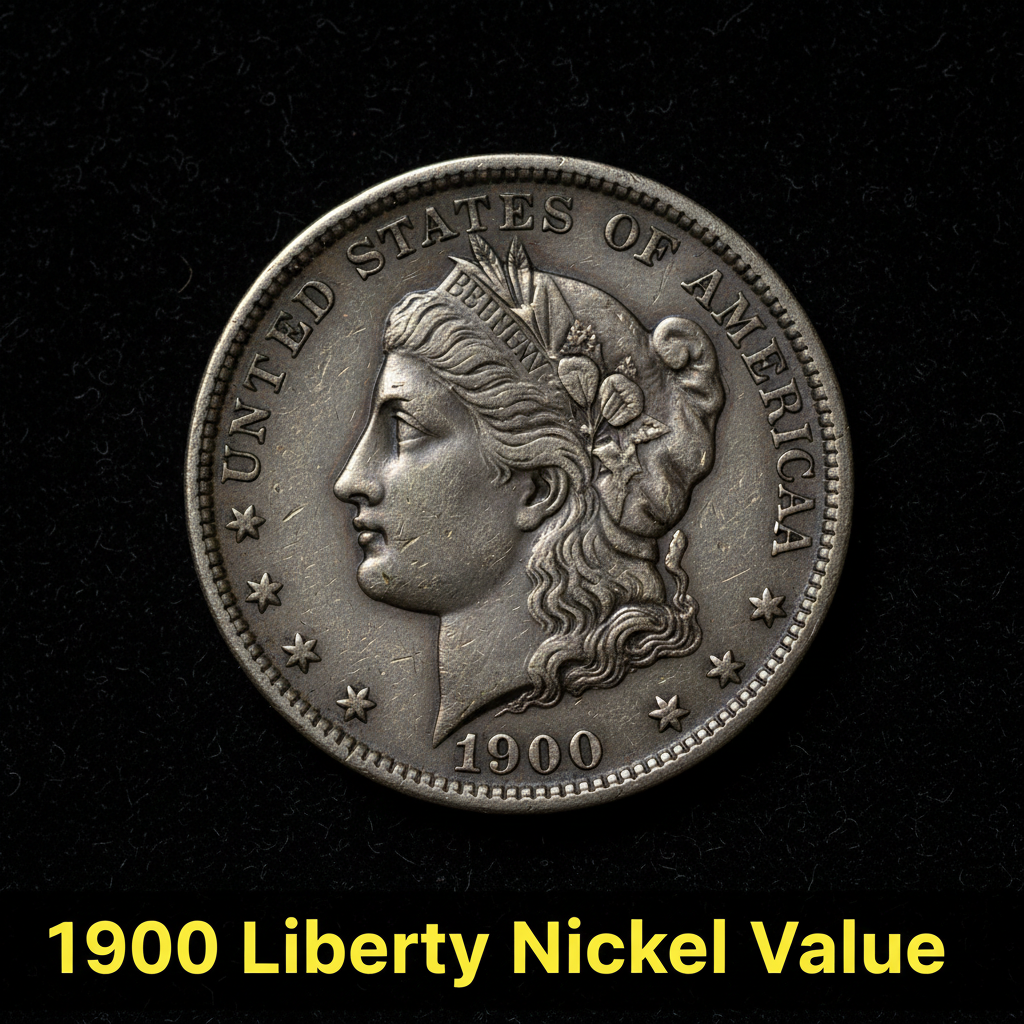
The 1900 Liberty Nickel, also known as the “V Nickel” because of the Roman numeral five on its reverse, was struck at the Philadelphia Mint during a time when nickel coins were a major part of everyday American commerce. Designed by Charles Barber, the coin features a classical portrait of Liberty on the obverse surrounded by 13 stars and the date 1900. The reverse displays a large “V” encircled by a decorative wreath. These coins are 75% copper and 25% nickel, measuring 21.2 mm across.
If you recently found one and aren’t sure what you’re looking at, using a free coin identifier app is a great starting point. Apps like CoinKnow can scan your coin and give you instant identification and basic valuation right from your smartphone — no numismatic expertise required.
1900 Liberty Nickel Value by Grade
Coin value is almost entirely driven by condition, which collectors refer to as “grade.” A coin that spent decades passing through pockets and cash registers will show heavy wear, while an uncirculated example that was saved right away can still show original mint luster. Here’s a general breakdown of 1900 Liberty Nickel values across different grades:
| Grade | Description | Estimated Value |
|---|---|---|
| Good (G-4) | Heavy wear, outline visible | $2 – $4 |
| Very Good (VG-8) | Moderate wear, main details clear | $5 – $8 |
| Fine (F-12) | Even wear, lettering sharp | $9 – $15 |
| Extremely Fine (EF-40) | Light wear on high points only | $25 – $40 |
| About Uncirculated (AU-55) | Slight wear, most luster intact | $50 – $75 |
| Mint State (MS-63+) | No wear, full luster | $100 – $200+ |
For more detailed and up-to-date figures, you can browse 1900 Liberty Nickel prices across mint state grades to see how recently graded examples have sold.
What Makes Some 1900 Liberty Nickels Worth More?
Not every 1900 Liberty Nickel is created equal. A few key factors can dramatically push a coin’s value well above the typical range. First and foremost, eye appeal matters — coins with strong strike quality, original luster, and no distracting marks or cleaning will command significant premiums, especially in uncirculated grades. Collectors and dealers pay close attention to whether a coin has been cleaned or polished, which actually reduces value rather than increasing it.
Strike quality is another important variable. Some 1900 Liberty Nickels came out of the dies with weak detail on Liberty’s hair or the wreath, while others are sharply struck throughout. A fully struck MS-64 or MS-65 example can sell for hundreds of dollars at major auction houses. Professional certification from PCGS or NGC also plays a big role — a coin in a certified holder will almost always sell for more than a raw, ungraded example of the same apparent quality. CoinKnow can help you understand whether your coin looks like it might be worth getting professionally graded.
How to Check the Condition of Your 1900 Liberty Nickel
You don’t need to be an expert to do a basic condition assessment at home. Start by holding your coin under a single light source and tilting it slowly. High-wear areas on the 1900 Liberty Nickel include the hair above Liberty’s ear, the cheekbones, and the tips of the wreath leaves on the reverse. If those areas are flat and featureless, you’re looking at a Good or Very Good coin. If you can still see individual hair strands and leaf veins, it could grade Fine or better.
Avoid rubbing or cleaning the coin — this is one of the most common mistakes first-time sellers make. Even a gentle wipe with a cloth can leave microscopic scratches that reduce value noticeably. If your coin appears to be in excellent shape, it may be worth comparing it against similar era coin values and condition standards to better understand how grading scales work across coins from the same period. CoinKnow also includes a visual grading guide that walks you through the process step by step.
Where to Sell a 1900 Liberty Nickel
Once you know what you have, your options include online auction sites like eBay, coin dealers at local shops or coin shows, and professional auction houses for high-grade examples. For most circulated coins in the $2–$40 range, eBay is perfectly fine and reaches the largest audience. If your coin grades AU or higher, consider submitting to PCGS or NGC before selling — certified coins typically sell for 20–40% more than unslabbed equivalents. Local coin shops are convenient but tend to offer wholesale prices, so shop around if you can.
FAQ
Q: How many 1900 Liberty Nickels were minted?
A: The Philadelphia Mint produced 27,255,995 Liberty Nickels in 1900, making it a relatively common date compared to earlier issues in the series. Despite the large mintage, high-grade examples are still scarce and collectible.
Q: Is there a rare variety of the 1900 Liberty Nickel?
A: The 1900 Liberty Nickel does not have a widely recognized major variety that commands a large premium. However, collectors do look for sharply struck examples and proofs, of which a small number were made for collectors. A 1900 Proof Liberty Nickel can sell for $300 or more depending on condition.
Q: Should I clean my 1900 Liberty Nickel before selling it?
A: No — never clean a coin you plan to sell. Cleaning removes original surface metal and luster, and experienced buyers and graders can easily detect it. A cleaned coin will almost always be worth less than a naturally toned circulated example of the same grade, and certified graders will note “cleaned” on the holder, which significantly reduces resale value.