1917-D Wheat Penny Value What It’s Worth and Why Collectors Care
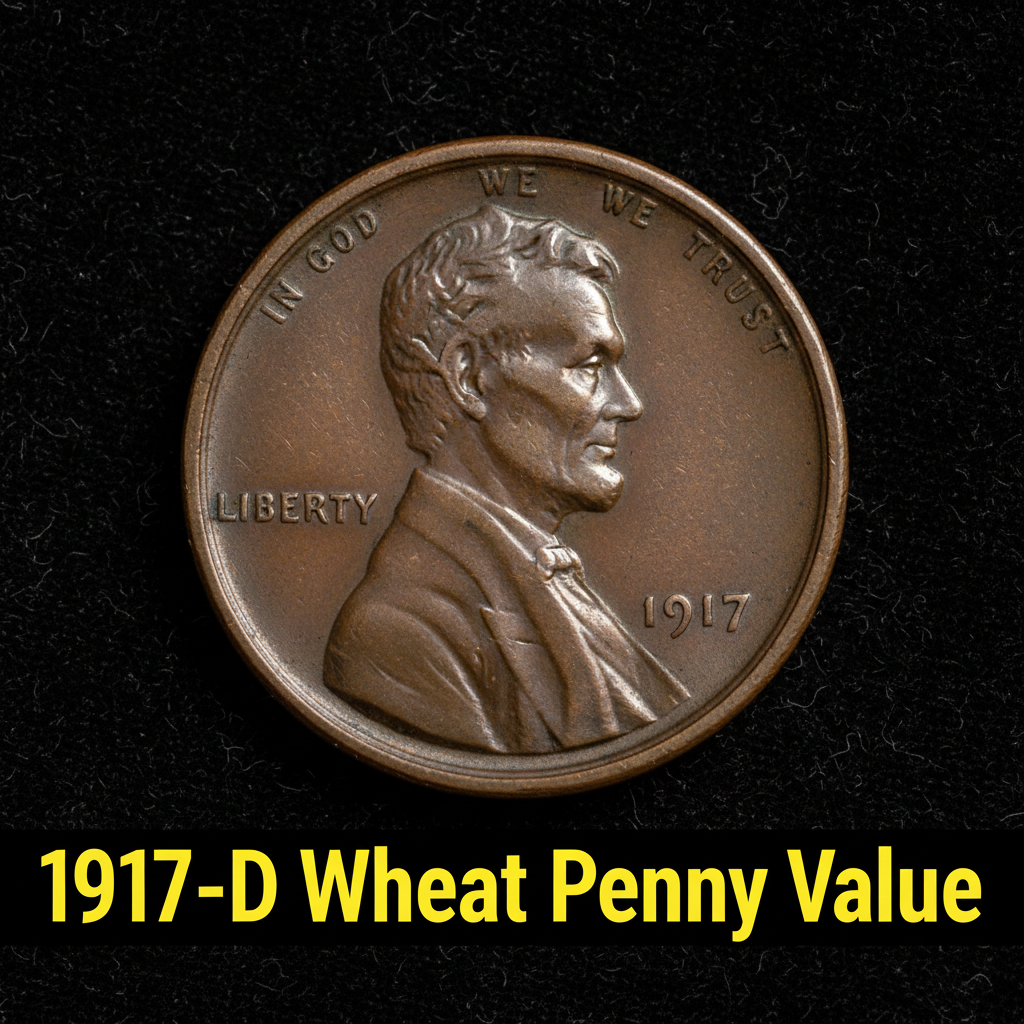
The 1917-D Wheat Penny is worth anywhere from $0.50 in heavily worn condition to well over $100 in high mint state grades — and rare examples have sold for thousands at auction. If you found one of these old Lincoln cents in a coin jar or inherited collection, you might be sitting on more than pocket change.
What Makes the 1917-D Wheat Penny Special
The “D” mintmark on a 1917 Lincoln Wheat Penny tells you it was struck at the Denver Mint, one of three facilities that produced cents that year alongside Philadelphia and San Francisco. Denver turned out 55,120,000 of these coins in 1917 — a large number, but not so large that high-grade survivors are easy to find today. Most of these pennies spent decades in circulation, picking up wear along the way. That’s why a truly sharp, uncirculated 1917-D is genuinely scarce and commands strong prices from collectors. If you’ve stumbled across one and aren’t sure what you’re holding, using a free coin identifier app is a quick and easy way to confirm the coin’s details before you start researching its value. The obverse features Victor David Brenner’s portrait of Abraham Lincoln, and the reverse shows two wheat stalks framing “ONE CENT” — the classic design that ran from 1909 to 1958.
1917-D Wheat Penny Value by Grade
Coin condition — or “grade” — is everything when it comes to value. A coin graded Good (G-4) shows heavy wear but still has readable lettering. Fine (F-12) means moderate wear with some detail visible. Extremely Fine (EF-40) retains sharp detail with only light wear on the high points. Mint State (MS) coins were never circulated and can range from MS-60 (slightly imperfect) to MS-65 or higher (gem quality). For the most up-to-date 1917-D Wheat Penny price data across mint state grades, it’s worth checking a reliable pricing database before buying or selling.
| Grade | Description | Estimated Value |
|---|---|---|
| Good (G-4) | Heavy wear, outline visible | $0.50 – $1.50 |
| Fine (F-12) | Moderate wear, some detail | $3 – $6 |
| Very Fine (VF-20) | Light to moderate wear | $8 – $15 |
| Extremely Fine (EF-40) | Light wear on high points | $20 – $35 |
| About Uncirculated (AU-55) | Slight trace of wear | $40 – $65 |
| Mint State (MS-63) | Uncirculated, minor marks | $80 – $120 |
| Gem Mint State (MS-65+) | Exceptional luster and detail | $300 – $1,000+ |
How to Check the Condition of Your 1917-D Penny
Before assuming your coin is worth top dollar, take a close look at it under good lighting — natural daylight or a direct lamp works well. Check Lincoln’s cheekbone and jaw, the wheat stalks on the reverse, and the lettering around the rim. These are the areas that wear down first. If the design looks flat and details have blended together, you’re probably looking at a Good or Fine coin worth a few dollars. If Lincoln’s portrait shows sharp hair lines and the wheat stalks have crisp definition, you might have a higher-grade piece. CoinKnow is a popular app that can help you identify your coin and get a preliminary grade estimate right from your phone — no numismatic experience needed. Many everyday collectors use it as a first step before taking a coin to a dealer or submitting it for professional grading through services like PCGS or NGC.
Errors and Varieties That Can Add Value
Some 1917-D Wheat Pennies are worth significantly more than standard examples due to mint errors or die varieties. Doubling on the date or lettering, off-center strikes, and repunched mintmarks are among the errors that collectors actively seek out. An off-center strike of 10% or more can easily double or triple a coin’s value. A dramatic 50% off-center error on a 1917-D in decent condition might fetch $100 or more even in circulated grades. If you suspect your coin has an unusual look — tilted lettering, doubled features, or an incomplete design — it’s worth having it examined. You can explore a full breakdown of 1917 Wheat Penny values including error coins and all three mint varieties to understand where your specific coin fits. CoinKnow also flags common error types during its scan, which makes it a handy starting point for curious collectors.
Where to Sell Your 1917-D Wheat Penny
Once you know what you have, selling options are plentiful. eBay is one of the most active marketplaces for wheat pennies — search completed listings to see what 1917-D cents in similar condition have actually sold for, not just what sellers are asking. Coin shows, local dealers, and online coin forums are other solid options. For coins in mint state or with errors, consider third-party grading first — a certified coin almost always sells faster and for more money. Even a circulated 1917-D is worth holding onto if you enjoy collecting, since Lincoln Wheat Pennies continue to grow in popularity. CoinKnow can also help you track the current market value of your coins over time, so you always know when it might be the right moment to sell.
FAQ
Q: How do I know if my penny is a 1917-D and not a 1917-S or plain 1917?
A: Look for a small letter below the date on the obverse (front) of the coin. A “D” means Denver, an “S” means San Francisco, and no mintmark means Philadelphia. The mintmark is tiny, so use a magnifying glass or loupe for a clear view.
Q: Is a 1917-D Wheat Penny worth cleaning before selling?
A: No — never clean a coin you plan to sell. Cleaning removes the natural patina that collectors expect and can reduce the value by 50% or more, even on a low-grade coin. Leave it exactly as you found it.
Q: What’s the most valuable 1917-D Wheat Penny ever sold?
A: Top-grade examples certified MS-66 Red by PCGS or NGC have sold for over $3,000 at major auction houses. The color designation “Red” (RD) means the coin retains its original copper luster, which is extremely rare after more than a century.