1922-D Wheat Penny Value Guide How Much Is Your Coin Worth
The 1922-D Wheat Penny is worth anywhere from $10 in heavily worn condition to over $1,000 or more in high mint state grades, making it one of the most sought-after Lincoln cents of the entire Wheat Penny era. If you found one of these coins in an old jar, drawer, or inherited collection, you may be sitting on a surprisingly valuable piece of American history.
What Makes the 1922-D Wheat Penny Special
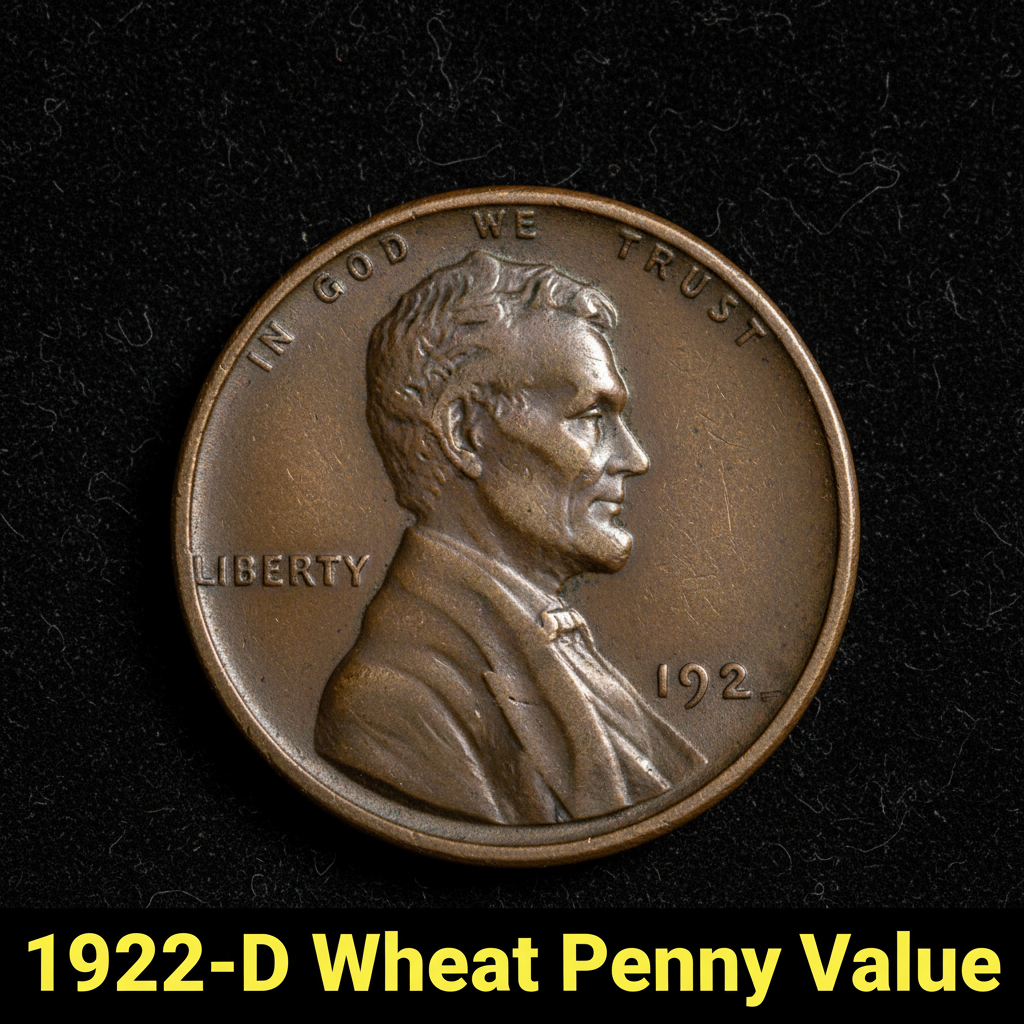
The 1922-D Wheat Penny holds a unique place in U.S. coin collecting. During 1922, the Philadelphia Mint did not produce any Lincoln cents — the Denver Mint was the sole facility striking pennies that year. That alone makes every 1922 penny a “D” mint mark coin by default. The “D” stands for Denver, and you’ll find that mint mark on the obverse side, just below the date.
If you stumbled across one of these in a coin roll or old collection, using a free coin identifier app is a great first step to confirm what you have before spending money on a professional appraisal. Apps like CoinKnow can help you identify your coin in seconds using just your smartphone camera — it’s one of the easiest ways for everyday people to get a quick read on what they’ve found.
The 1922-D is popular among collectors not just because of its single-mint origin, but because of its relatively low mintage compared to other Wheat Penny years. Roughly 7.16 million coins were struck, which sounds like a lot — until you consider how few survived in good condition over the past century.
1922-D Wheat Penny Value by Grade
Coin value is almost entirely dependent on condition, which professional graders measure on a scale from 1 (Poor) to 70 (Perfect Mint State). Here’s a general breakdown of what the 1922-D Wheat Penny is worth at different grade levels:
| Grade | Condition Description | Estimated Value |
|---|---|---|
| G-4 (Good) | Heavy wear, date visible | $10 – $15 |
| VG-8 (Very Good) | Moderate wear, clear details | $15 – $25 |
| F-12 (Fine) | Light to moderate wear | $25 – $40 |
| VF-20 (Very Fine) | Light wear on high points | $40 – $75 |
| EF-40 (Extremely Fine) | Slight wear, strong details | $90 – $150 |
| MS-63 (Mint State) | Uncirculated, minor blemishes | $400 – $700 |
| MS-65 (Gem Mint State) | Uncirculated, sharp luster | $1,000+ |
For a more detailed breakdown of 1922 penny values across all grades and varieties, it’s worth checking dedicated coin value resources that track auction results and current market trends.
The Rare 1922 Plain Penny — A Major Variety to Know
When researching the 1922-D Wheat Penny, you’ll inevitably come across the famous “1922 Plain” variety — a coin that appears to have no mint mark at all. This happened because some dies became so worn during production that they failed to stamp the “D” clearly onto the coin. The result looks like a Philadelphia issue, even though Philadelphia made no pennies that year.
The 1922 Plain is one of the most valuable Wheat Penny errors in existence. In circulated grades, these coins routinely sell for hundreds of dollars. In high grades, they can fetch $10,000 or more at major auction houses. If your 1922 penny has no visible “D” mint mark, treat it with extreme care and consult a certified coin dealer or grading service immediately. CoinKnow can also help you do a quick preliminary check to see if your coin matches the known diagnostics of this variety before you seek professional evaluation.
How to Check Your 1922-D Wheat Penny at Home
You don’t need to be an expert to get a rough idea of your coin’s value. Start by examining the coin under good lighting with a basic magnifying glass. Look for:
– The mint mark: The “D” should be clearly visible below the date on the obverse.
– Overall wear: Are Lincoln’s cheekbones and the wheat stalks on the reverse sharp, or flattened from circulation?
– Color and luster: Uncirculated coins have a natural reddish-brown or full red tone. Heavy toning or dark spots can reduce value.
– Cleaning: Cleaned coins are worth significantly less to collectors. If a coin looks unnaturally shiny, it may have been polished.
Once you’ve done a visual check, CoinKnow offers an easy way to cross-reference your findings with current market data, giving you a more confident baseline value right from your phone.
Where to Sell a 1922-D Wheat Penny
If you decide to sell, you have several solid options. Online platforms like eBay and Heritage Auctions are popular for reaching active coin collectors. Local coin dealers can offer immediate cash, though they typically pay below retail to account for their resale margin. For high-grade examples, submitting to a third-party grading service like PCGS or NGC before selling will almost always result in a higher final sale price. You can also monitor 1922 coin price data in mint state grades to get a feel for what the current market looks like before committing to a sale.
Frequently Asked Questions
Q: How do I know if my 1922 penny is the rare “Plain” variety or just a worn 1922-D?
A: The 1922 Plain variety shows specific diagnostic traits — one side of Lincoln’s portrait will appear weaker than the other due to die wear. A coin with a faint or missing “D” but strong overall detail on both sides is more likely a genuine Plain variety. Consult a reputable dealer or submit to PCGS/NGC for authentication.
Q: Is a 1922-D Wheat Penny worth cleaning before selling?
A: No. Never clean a coin you think may be valuable. Cleaning removes the natural patina that collectors prize and can reduce a coin’s market value by 50% or more. Sell it exactly as you found it.
Q: Where is the mint mark on a 1922-D Wheat Penny?
A: The “D” mint mark is located on the obverse (heads side) of the coin, just below the date “1922” and slightly to the right. A magnifying glass makes it much easier to spot on worn examples.