1913 Wheat Penny Value No Mint Mark What It’s Worth and Why Collectors Care
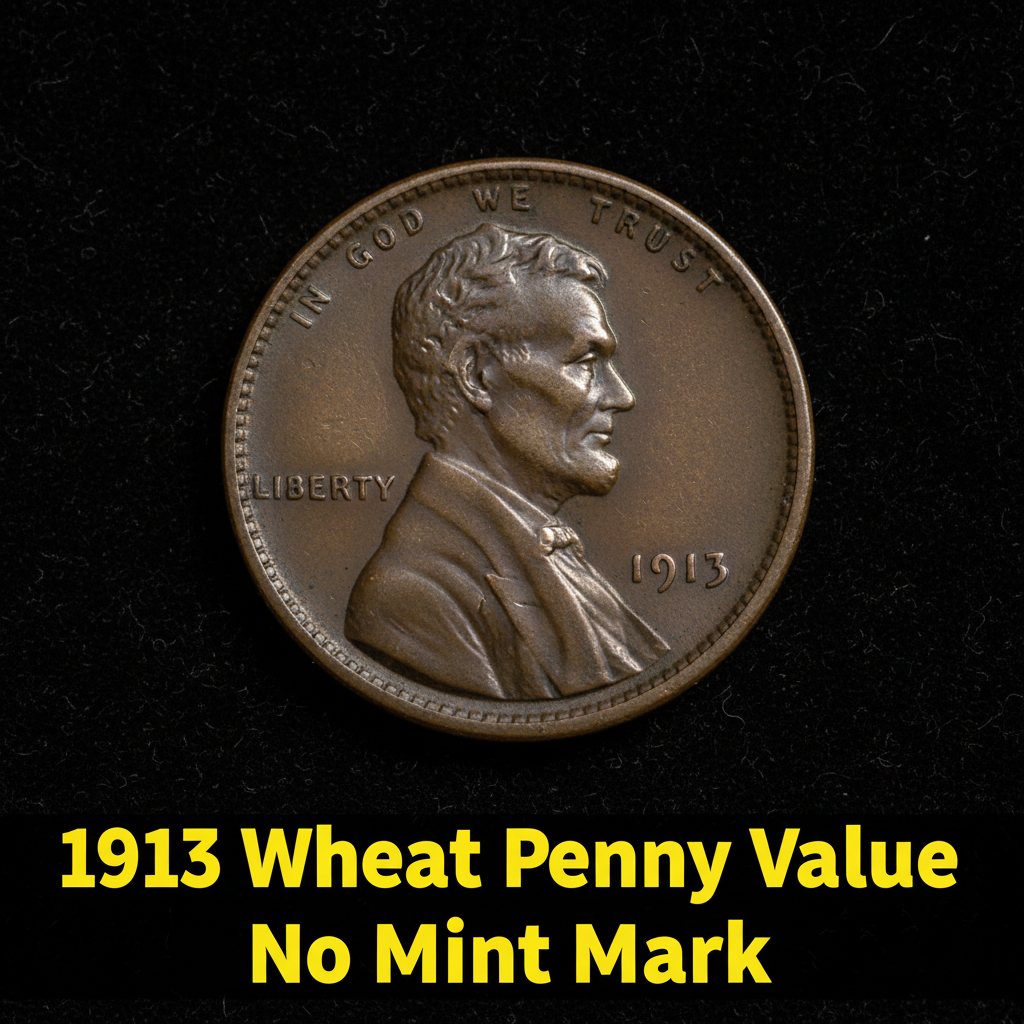
The 1913 Wheat Penny with no mint mark is worth anywhere from $0.50 in heavily worn condition to over $100 or more in mint state, making it a surprisingly valuable find for anyone sorting through old jars of coins. If you’ve got one sitting on your desk right now, keep reading — you might be holding more than spare change.
What Does “No Mint Mark” Mean on a 1913 Wheat Penny?
When you turn over a 1913 Lincoln Wheat Penny and see no mint mark below the date, that tells you the coin was struck at the Philadelphia Mint. Back in the early 1900s, Philadelphia was the main U.S. Mint, and it didn’t add a mint mark to its coins — that was just the standard practice at the time. So a blank space where a mint mark would be isn’t a flaw or an error; it simply means Philadelphia made your coin.
The Philadelphia Mint produced over 76 million Lincoln cents in 1913, which makes the no mint mark version the most common of the three 1913 Wheat Penny varieties. The other two — struck in Denver (D) and San Francisco (S) — had much lower mintages and tend to be worth more. But don’t let the word “common” fool you. Age alone adds value, and even a well-worn 1913 cent can bring in real money depending on its grade.
If you’re not sure what you have, using a free coin identifier app is a quick way to get started before heading to a dealer or doing deeper research.
1913 Wheat Penny Value by Grade
Coin value is almost entirely tied to condition — what collectors call “grade.” The better the coin looks, the more it’s worth. Here’s a breakdown of typical market values for the 1913 Lincoln Wheat Penny with no mint mark:
| Grade | Description | Estimated Value |
|---|---|---|
| Good (G-4) | Heavy wear, design visible | $0.50 – $1.50 |
| Fine (F-12) | Moderate wear, details clearer | $2 – $5 |
| Extremely Fine (EF-40) | Light wear on high points | $10 – $20 |
| Mint State (MS-63) | Uncirculated, minor marks | $50 – $80 |
| Mint State (MS-65 RD) | Gem uncirculated, full red | $100 – $200+ |
For the most up-to-date auction results and certified coin sales, you can review current 1913 Wheat Penny MS-RD price data by grade and color designation — it’s a solid reference before you decide to sell or hold.
What Makes a 1913 Penny Worth More?
Several factors can push your 1913 Wheat Penny value above the average range. Color designation is a big one for uncirculated coins. Grading services like PCGS and NGC assign red (RD), red-brown (RB), or brown (BN) labels to copper coins. A coin that has retained its original red-orange copper luster is far rarer and commands the highest prices. A brown uncirculated example is worth noticeably less than the same coin labeled full red.
Strike quality also matters. Some 1913 Philly cents came off the dies with weak impressions on Lincoln’s hair and beard or on the wheat stalks on the reverse. A sharply struck, well-centered coin is more desirable to collectors. Finally, any coin that has been professionally graded and encapsulated (called “slabbed”) by a trusted third-party service will generally sell for more than a raw coin in a similar condition, simply because the grade is verified and guaranteed.
How to Tell If Your 1913 Wheat Penny Is the Real Deal
Most 1913 Lincoln cents you’ll find are genuine — there’s no famous rare key date in this year that’s commonly faked. That said, watch for cleaned coins. Many old pennies were polished or chemically cleaned by well-meaning previous owners, which actually destroys value. A cleaned coin looks unnaturally shiny and often has a dull, flat surface under magnification. Collectors call this “whizzed” or “tooled,” and it can cut value by 50% or more.
Also check the date carefully. The numbers should be sharp and properly formed. On circulated coins from 1913, the “3” at the end sometimes shows wear, but it should still be readable. If anything looks off, get a second opinion from a dealer.
CoinKnow is a great tool for this — the app lets you scan your coin and get an instant condition assessment and value estimate, right from your phone.
Where to Sell Your 1913 Wheat Penny
Once you know your coin’s approximate grade, you’ve got several options. Online marketplaces like eBay are popular for lower-grade coins, where the market is liquid and buyers are plentiful. For nicer examples — anything grading Fine or above — consider submitting to a coin auction house or getting the coin slabbed first to maximize sale value.
Local coin shops are convenient for a quick sale, though you’ll typically get wholesale pricing. Coin shows are another excellent venue, where you can approach multiple dealers in one afternoon and compare offers.
For a comprehensive look at 1913 Penny values across all mint marks and grades, that resource breaks down what each variety is realistically worth on today’s market, which is useful when you’re comparing offers.
And if you want to track values over time and get alerts when similar coins sell, CoinKnow makes it easy to manage your collection and stay informed without needing to be an expert.
—
FAQ
Q: Is a 1913 Wheat Penny with no mint mark rare?
A: Not particularly rare, since Philadelphia struck over 76 million of them. However, finding one in uncirculated condition with original red color is genuinely scarce and can be worth $100 to $200 or more.
Q: Should I clean my 1913 Wheat Penny before selling it?
A: No — never clean an old coin. Cleaning removes the original surface and dramatically reduces value. Even a dull, dirty coin is worth more in its natural state than one that has been polished or washed.
Q: How do I know if my 1913 Lincoln cent is worth getting professionally graded?
A: If your coin appears uncirculated or in extremely fine condition with no visible cleaning, grading it through PCGS or NGC may be worthwhile. The cost is typically $30–$50 per coin, so it makes sense when the coin’s potential value is well above that threshold. CoinKnow can give you a quick preliminary assessment to help you decide.