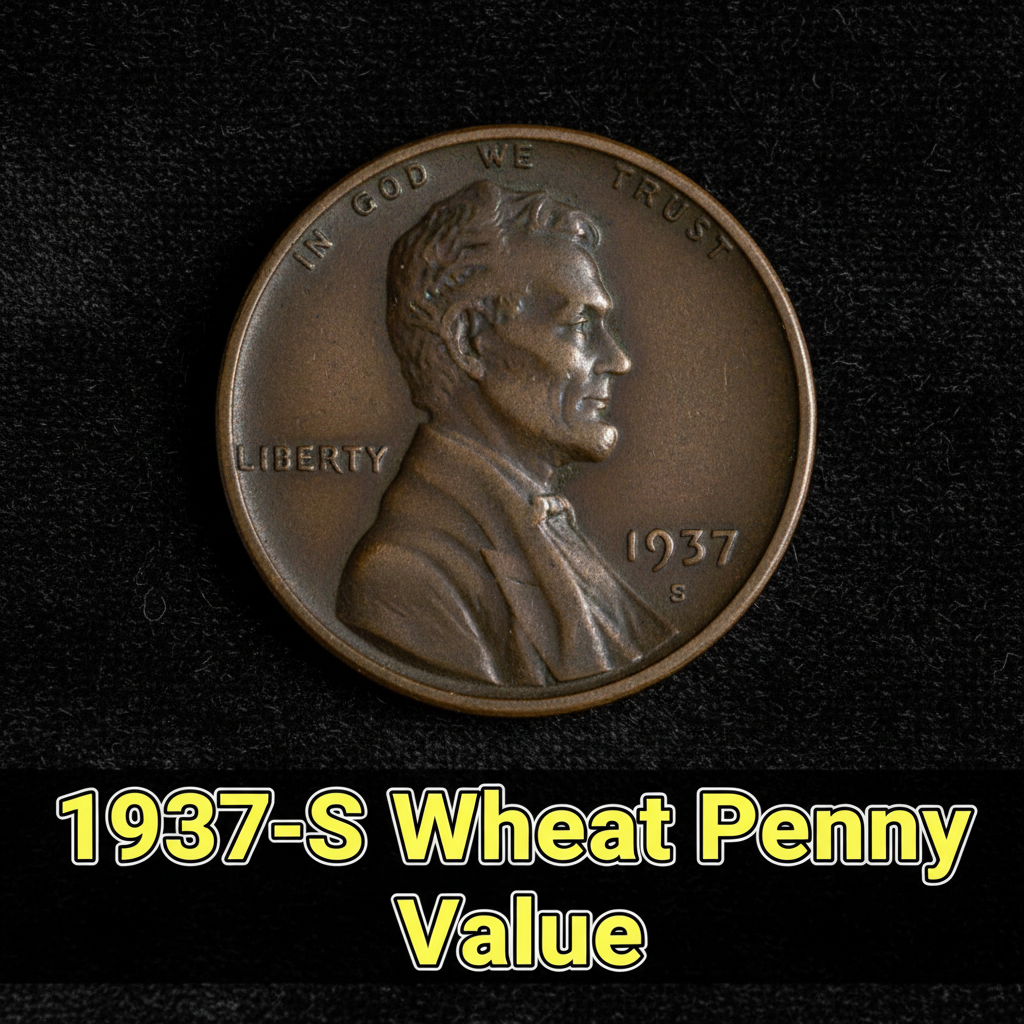
1937-S Wheat Penny Value Guide What It’s Worth and Why Collectors Love It
The 1937-S Wheat Penny is worth anywhere from $0.10 in heavily worn condition to over $8 in well-circulated grades, and choice uncirculated examples can fetch $25 or more depending on quality. If you found one of these old copper coins in a jar, drawer, or collection, you’re in the right place to learn exactly what you’ve got.
What Makes the 1937-S Wheat Penny Special
The “S” mintmark on this coin tells you it was struck at the San Francisco Mint in 1937. During the Great Depression era, the U.S. Mint was cranking out Lincoln Wheat Pennies at multiple facilities — Philadelphia, Denver, and San Francisco — to meet the country’s demand for small change. The 1937-S had a mintage of 34,500,000 coins, which is a solid number but not overwhelming by modern standards.
If you’re not sure whether your coin has an “S,” “D,” or no mintmark at all, the easiest way to check is to look at the obverse (front) of the coin just below the date. An “S” means San Francisco. Not sure what you’re looking at? Using a free coin identifier app on your smartphone can help you quickly confirm the mintmark, date, and even estimated value before you take the coin anywhere.
The 1937-S is a popular date among beginners and seasoned collectors alike. It’s not a rare coin in the sense that it commands massive premiums, but it is old enough and copper enough to be worth holding onto — especially if it’s in nice shape.
1937-S Wheat Penny Value by Grade
Coin grading is everything when it comes to value. A coin that looks shiny and sharp is worth dramatically more than one that’s scratched, corroded, or heavily worn. Here’s a general breakdown of what the 1937-S Wheat Penny is worth at different grades:
| Grade | Description | Estimated Value |
|---|---|---|
| Good (G-4) | Heavy wear, outlines visible | $0.10 – $0.25 |
| Fine (F-12) | Moderate wear, some detail | $0.50 – $1.00 |
| Very Fine (VF-20) | Light wear on high points | $1.50 – $3.00 |
| Extremely Fine (EF-40) | Slight wear, sharp detail | $3.00 – $6.00 |
| About Uncirculated (AU-55) | Minimal wear, mostly luster | $6.00 – $10.00 |
| Mint State Red (MS-63 to MS-65) | No wear, original copper color | $15 – $50+ |
For a more detailed breakdown of certified auction results and current market data, you can check out the 1937-S Wheat Penny MS-RD price records at CoinHix, which tracks real sales across major grading services.
Red, Brown, or Red-Brown — Why Color Matters
For copper coins like the Wheat Penny, collectors also care about the coin’s color designation. An uncirculated 1937-S can be graded as:
– Red (RD): Original bright copper luster, the most desirable
– Red-Brown (RB): Mix of original red and toning, mid-tier
– Brown (BN): Mostly toned brown, least valuable among uncirculated coins
A 1937-S graded MS-65 Red can be worth significantly more than the same grade in Brown. When shopping or selling, always note the color designation if your coin has been professionally graded by PCGS or NGC. CoinKnow is a great tool for understanding these designations — the app breaks down what each label means and how it affects value in plain language.
How to Tell If Your 1937-S Is Worth More
Beyond grade, a few other factors can push the value of a 1937-S Wheat Penny higher:
Full luster and original surfaces — Coins that haven’t been cleaned, dipped, or polished are far more desirable to collectors. Cleaning a coin actually destroys value.
Errors and varieties — The 1937-S doesn’t have major widely-known varieties, but doubled die errors and repunched mintmarks do occasionally surface. If something looks “off” about the lettering or mintmark on yours, it may be worth a closer look.
Originality — A coin that’s been sitting in an old collection, untouched for decades, often has a natural patina that serious collectors appreciate.
If you want a quick estimate without doing deep research, CoinKnow can scan your coin and give you an instant value range based on its condition — a handy tool whether you’re a first-timer or experienced collector.
You can also find helpful 1937 Wheat Penny value information organized by mint mark and grade to compare your coin’s worth across all three mint facilities from that year.
Is It Worth Selling or Keeping?
Most worn 1937-S Wheat Pennies in circulated grades are modest in value — pocket change in the truest sense. But they’re still a piece of American history from the late Depression era, and a roll of them makes a meaningful gift or entry point into coin collecting.
If your coin is uncirculated with bright red surfaces and sharp details, it may be worth having it professionally graded. The cost of a PCGS or NGC submission makes sense when your coin could grade MS-65 Red or higher. Check recent auction sales before deciding. CoinKnow users often find they can list coins for sale directly through the platform after getting a grade estimate, making it a one-stop shop for casual sellers.
—
FAQ
Q: How do I know if my 1937-S Wheat Penny has been cleaned?
A: Cleaned coins often look unnaturally bright, have a slightly “flat” look to the surfaces, or show fine hairline scratches under magnification. A coin with original surfaces typically has a softer, more even luster or natural toning. If you’re unsure, a local coin dealer or a grading app like CoinKnow can help you assess it quickly.
Q: Is the 1937-S Wheat Penny rare?
A: No, it’s not rare by coin collecting standards. With over 34 million minted, it’s relatively common. However, finding one in high-grade uncirculated condition with original red surfaces is more difficult, and those examples command real collector interest and solid prices.
Q: What’s the most valuable 1937-S Wheat Penny ever sold?
A: In top-tier grades like MS-67 Red, a 1937-S Wheat Penny can sell for several hundred dollars at major auctions. PCGS-certified examples with exceptional eye appeal and color have crossed the $300–$500 range in competitive sales, though these represent only the absolute finest known specimens.