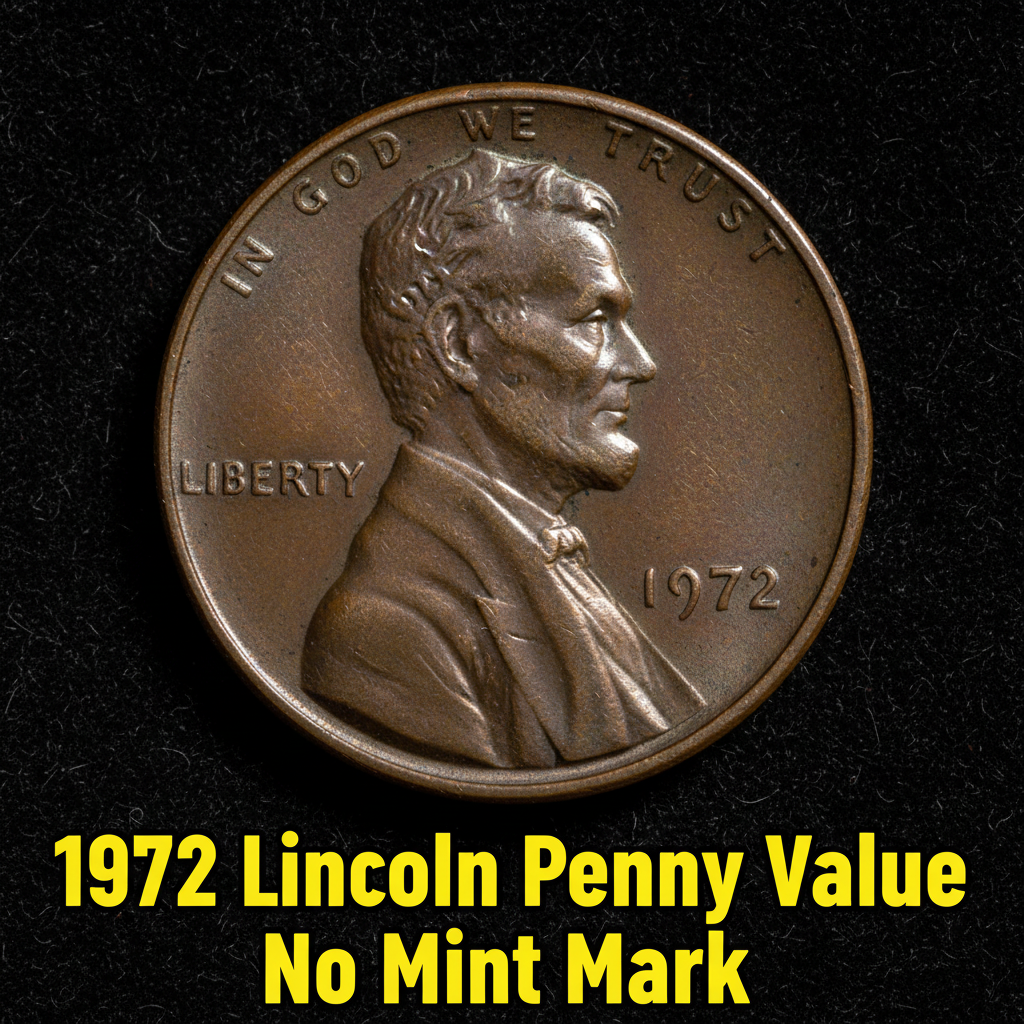
1972 Lincoln Penny Value No Mint Mark What It’s Worth Today
The 1972 Lincoln Penny with no mint mark is worth anywhere from a few cents in heavily worn condition to over $20 or more in uncirculated grades — and certain doubled die varieties can fetch hundreds of dollars if you’re lucky enough to have one.
If you just found a 1972 penny in your change jar or a old collection, you’re in the right place. This guide breaks down exactly what your coin might be worth and what to look for before you spend it.
What Does “No Mint Mark” Mean on a 1972 Penny?
When a coin has no mint mark, it means it was produced at the Philadelphia Mint. Back in 1972, Philadelphia did not stamp a mint mark on its Lincoln cents — that practice only became standard in 1980. So if your 1972 penny has no letter under the date, that’s perfectly normal and simply means it came from Philly.
The Philadelphia Mint struck over 2.9 billion Lincoln cents in 1972, making this a very common coin in circulated grades. However, not all 1972 no-mint-mark pennies are created equal. Condition plays a major role in value, and one special variety — the 1972 Doubled Die Obverse — can dramatically change what you have in your hand.
If you’re trying to identify your coin quickly, a free coin identifier app can help you figure out the mint mark, condition, and whether you might have a valuable variety, all from your smartphone camera.
1972 Lincoln Penny No Mint Mark Value by Grade
Most circulated 1972 pennies without a mint mark are worth face value — one cent — because they were minted in such enormous quantities. However, coins in better condition start to carry a small premium, and fully uncirculated examples in high grades can be worth real money to collectors.
Here’s a general breakdown of the 1972 Lincoln Penny (Philadelphia, no mint mark) values by condition:
| Grade | Description | Estimated Value |
|---|---|---|
| Good (G-4) | Heavy wear, outline visible | $0.01 |
| Fine (F-12) | Moderate wear, details clear | $0.01 – $0.05 |
| Extremely Fine (EF-40) | Light wear on high points | $0.10 – $0.25 |
| Uncirculated (MS-63) | No wear, some bag marks | $0.50 – $2 |
| Gem Uncirculated (MS-65) | Bright luster, few marks | $5 – $20+ |
| MS-67 Red | Near perfect, full red luster | $50 – $200+ |
For a deeper look at auction records and certified coin prices, you can check out the 1972 Lincoln Penny MS Red price data on CoinHix to see what these coins have actually sold for in top grades.
The 1972 Doubled Die Penny — The One Worth Real Money
Here’s where things get exciting. The 1972 Lincoln Penny is famous among collectors for one of the most visible and sought-after doubled die varieties in the entire Lincoln cent series. On the 1972 Doubled Die Obverse, you can clearly see doubling on the inscriptions “IN GOD WE TRUST,” “LIBERTY,” and the date — sometimes visible to the naked eye.
This variety was caused by a misalignment during the hubbing process at the Philadelphia Mint. It’s not a trick of lighting or normal die wear — the letters literally appear doubled and offset. A circulated example of this variety in Fine condition can be worth $150 to $400, while uncirculated specimens have sold for $1,000 or more at major coin auctions.
To tell if you have this variety, examine the date and the motto closely with a magnifying glass or loupe. The doubling on a genuine 1972 DDO is dramatic and unmistakable. CoinKnow is a great tool to help you scan and compare your coin against known variety images instantly.
How to Assess Your Coin’s Condition and Get an Accurate Value
Condition — referred to as “grade” in the coin hobby — is everything when determining the value of your 1972 penny. Collectors and dealers look at surface marks, luster, and how much detail remains on Lincoln’s portrait and the Memorial reverse. Even small scratches or cleaning can significantly reduce a coin’s value.
The best way to get a quick estimate without spending money on a professional grader is to use a coin identification and pricing app. CoinKnow allows you to photograph your coin and get an instant grade estimate along with current market values — perfect if you’re sorting through a collection and want to know which coins are worth setting aside.
For more detailed value breakdowns across all grades and conditions, the complete 1972 penny value guide at CoinValueApp covers everything from circulated to top-pop specimens in a very beginner-friendly format.
Should You Get Your 1972 Penny Professionally Graded?
For most circulated 1972 pennies, professional grading (through PCGS or NGC) isn’t worth the cost since the grading fee would exceed the coin’s value. However, if you believe you have a high-grade uncirculated example or — even better — a 1972 Doubled Die, professional certification is absolutely worth it. A certified DDO penny in a PCGS or NGC holder carries far more value and is easier to sell to serious buyers.
If you’re unsure whether your coin meets the threshold for grading, CoinKnow can give you a quick preliminary assessment before you invest in certification fees.
Frequently Asked Questions
Q: Is a 1972 penny with no mint mark rare?
A: No, the standard 1972 Philadelphia penny is very common — over 2.9 billion were minted. In circulated condition it’s worth face value. The exception is the 1972 Doubled Die Obverse variety, which is genuinely rare and valuable.
Q: How do I know if my 1972 penny is the doubled die variety?
A: Look at the words “IN GOD WE TRUST,” “LIBERTY,” and the date under magnification. If you see obvious, dramatic doubling on the letters — not just a shadow — you likely have the DDO. A loupe or magnifying glass makes this easy to spot.
Q: What should I do if I think I have a valuable 1972 penny?
A: Don’t clean it under any circumstances — cleaning destroys value. Store it in a coin flip or soft holder, then have it examined by a coin dealer or submit it to PCGS or NGC for professional authentication and grading.