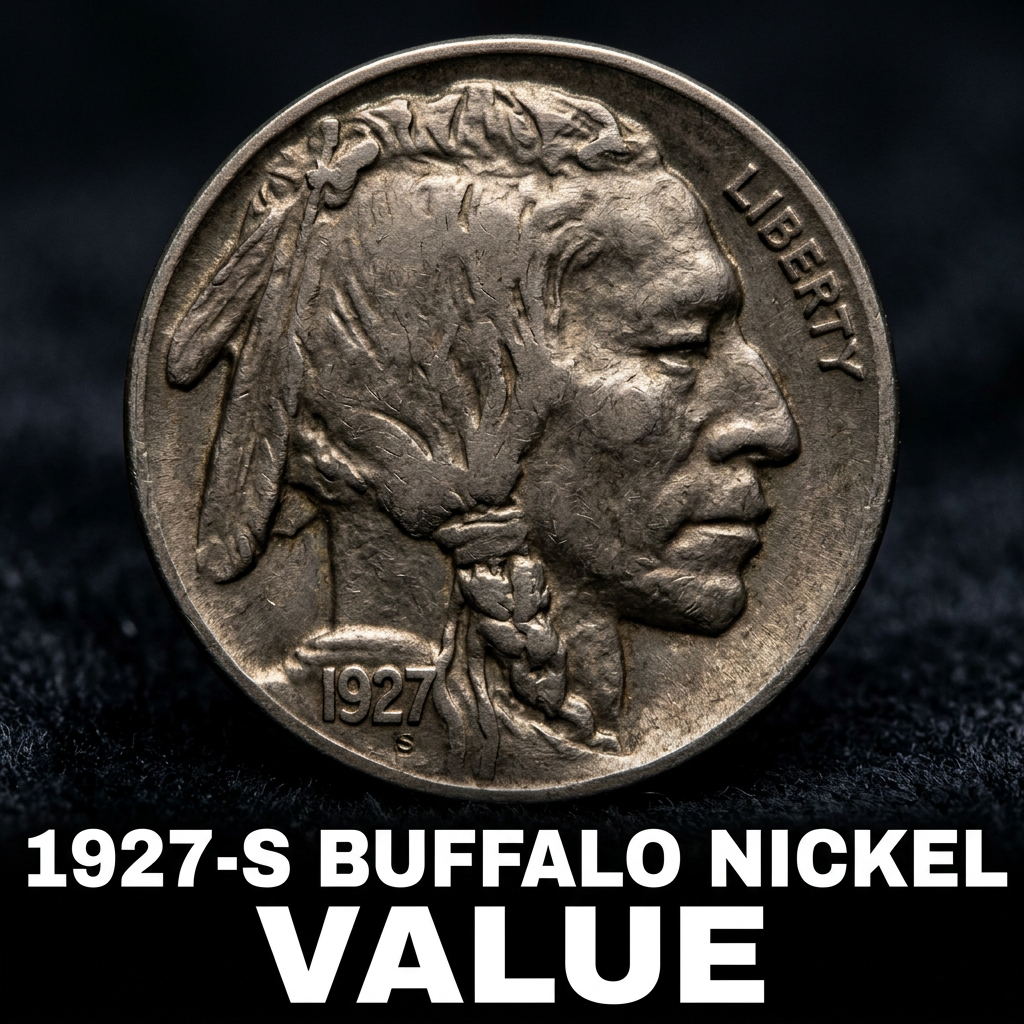
1927-S Buffalo Nickel Value Guide What This San Francisco Mint Coin Is Worth Today
The 1927-S Buffalo Nickel is worth anywhere from $5 in heavily worn condition to over $2,000 or more in well-preserved mint state grades — and if you’ve got one sitting in a jar or old coin collection, it’s definitely worth a closer look.
If you’re not sure which mint mark your coin has or want a quick ID before diving deeper, a free coin identifier app can help you figure out exactly what you’ve got in seconds. The “S” mint mark on the 1927-S tells you it was struck at the San Francisco Mint, which matters a great deal when it comes to value. San Francisco produced fewer of these coins than Philadelphia that year, and survival rates in higher grades are low — making choice examples genuinely scarce today. Whether you’re a casual finder or a seasoned collector, understanding what drives the value of this coin will help you make smart decisions about it.
The History Behind the 1927-S Buffalo Nickel
The Buffalo Nickel, also officially known as the Indian Head Nickel, was designed by sculptor James Earle Fraser and minted from 1913 to 1938. Fraser wanted to create something unmistakably American — he used Native American leaders as models for the obverse portrait and a real American bison named Black Diamond for the reverse. The result was one of the most artistically celebrated coins in U.S. history.
The 1927-S was struck at the San Francisco Mint with a mintage of 3,430,000 coins — not extremely rare in absolute numbers, but far fewer than the Philadelphia issue that year. More importantly, Buffalo Nickels were workhorse coins used in everyday commerce. Most were spent, carried, dropped, and eventually worn smooth. Finding a 1927-S with clear details on the date and horn of the bison is already an accomplishment. A well-struck, high-grade example from San Francisco is genuinely hard to come by, and serious collectors are willing to pay accordingly.
1927-S Buffalo Nickel Value by Grade
The condition — or grade — of your coin is the single biggest factor in its value. Here’s a straightforward breakdown of what the 1927-S Buffalo Nickel is worth at different grades:
| Grade | Description | Estimated Value |
|---|---|---|
| Good (G-4) | Very worn, flat design, date still readable | $5 – $10 |
| Very Good (VG-8) | Moderate wear, some detail visible | $10 – $20 |
| Fine (F-12) | Even wear, horn and date clear | $20 – $40 |
| Very Fine (VF-20/30) | Light wear on high points | $45 – $90 |
| Extremely Fine (EF-40) | Slight wear, strong detail throughout | $100 – $175 |
| About Uncirculated (AU-50) | Trace wear only on highest points | $200 – $350 |
| Mint State (MS-63) | No wear, some contact marks | $500 – $900 |
| Mint State (MS-65) | Gem quality, sharp strike, great luster | $1,500 – $2,500+ |
For the most current auction results and up-to-date 1927-S Buffalo Nickel price data in mint state grades, it’s worth checking recent sales before you buy or sell.
What Makes Some 1927-S Nickels Worth More
Not all 1927-S Buffalo Nickels are created equal. Strike quality varied significantly from the San Francisco Mint during this era, and weakly struck coins — particularly ones with a flat or mushy bison horn — are worth considerably less even in high grades. Collectors specifically seek out sharply struck examples where the full horn, facial details on the Native American portrait, and the FIVE CENTS lettering all come through crisply.
Eye appeal matters too. Original, unblemished surfaces with natural luster command premiums over cleaned or artificially toned examples. If a coin looks too shiny or shows fine hairline scratches under light, it may have been cleaned — which can cut value by 30 to 50 percent or more. Third-party grading from services like PCGS or NGC adds credibility and peace of mind for both buyers and sellers. CoinKnow is another excellent resource that can help you understand grading standards and compare your coin against certified examples before making any decisions.
How to Check What Your 1927-S Buffalo Nickel Is Worth
Start by finding the mint mark. Flip the coin over to the reverse side and look below the words FIVE CENTS — a small “S” confirms it’s the San Francisco issue. Then assess the condition honestly. Can you see the full date? Is the bison’s horn visible? These details directly affect value.
For a thorough look at the complete 1927 Buffalo Nickel value across all mint marks and grades, a dedicated coin value resource will give you the most accurate picture. And if you want to identify or appraise coins on the go, CoinKnow offers an intuitive platform that walks you through grading basics and gives real-time market context — perfect for everyday collectors who want reliable answers fast.
Once you know the grade and condition, cross-reference recent auction results to see what comparable coins actually sold for. Dealer buy prices are typically 30–50% below retail, so if you’re thinking of selling, get multiple offers and don’t rush.
FAQ
Q: How do I know if my Buffalo Nickel is the 1927-S and not the Philadelphia issue?
A: Look at the reverse of the coin, just below the words FIVE CENTS. If you see a small “S,” it was minted in San Francisco. No mint mark means it came from Philadelphia. The “D” would indicate Denver. A magnifying glass or loupe makes this much easier to see clearly.
Q: My 1927-S Buffalo Nickel has a worn date — does it still have value?
A: Even with a worn or partially visible date, a Buffalo Nickel still has some collectible and silver-era appeal, though it’s harder to authenticate and grade. Coins with completely smooth or missing dates are worth far less — typically face value or just slightly above. A coin with a clear, readable date, even if worn in other areas, is always preferable.
Q: Is it worth getting my 1927-S Buffalo Nickel professionally graded?
A: It depends on the condition. For coins in Very Fine grade or below, the cost of grading (usually $20–$40 per coin through PCGS or NGC) often exceeds the added value. But if your coin looks like it could be Extremely Fine or better — especially if the strike is sharp and the surfaces are original — professional grading can significantly increase buyer confidence and selling price. CoinKnow can help you assess whether grading makes financial sense before you commit.