1972 DDO Lincoln Penny Value What It’s Really Worth and How to Spot One
The 1972 DDO Lincoln Penny is one of the most exciting doubled die errors in American coin collecting, worth anywhere from $25 in heavily worn condition to over $500 or more in uncirculated grades — with top examples selling for thousands at auction.
If you found a 1972 penny and noticed something odd about the lettering or date, you might be sitting on a real treasure. The 1972 doubled die obverse (DDO) is a well-known error coin that collectors actively hunt for, and regular people discover them in change jars and old coin collections every year. Before you spend it on a coffee, it’s worth taking a closer look. Using a free coin identifier app can be a great first step to figure out exactly what you have in hand.
—
What Is the 1972 DDO Lincoln Penny?
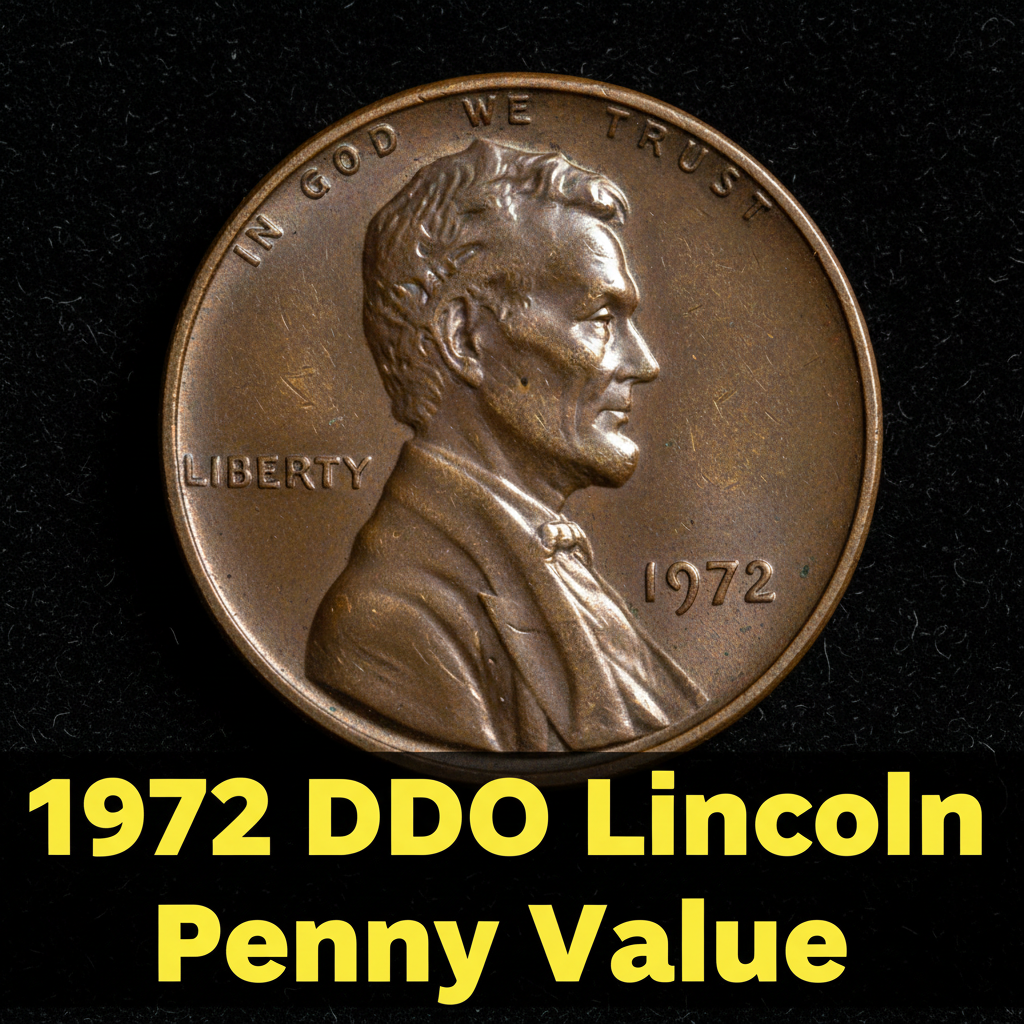
The 1972 DDO Lincoln Penny is a mint error that occurred at the Philadelphia Mint when the working die was accidentally hubbed twice in slightly different positions. This created a visible doubling on the obverse (front) of the coin — most noticeably in the date, the word LIBERTY, and the motto IN GOD WE TRUST. The doubling is not subtle on strong examples. You can often see it with the naked eye or a simple 5x loupe.
This coin was struck in the same year as regular 1972 Lincoln cents, so millions of normal pennies were also made. The DDO variety is far rarer, which is exactly why it commands such a premium. Collectors classify this as one of the top doubled die varieties in the entire Lincoln cent series, right up there with the famous 1955 DDO. If the doubling on your coin is clear and dramatic, there’s a strong chance you have the real deal — and it could be worth serious money.
—
How Much Is the 1972 DDO Penny Worth Today?
Value depends heavily on the condition of your coin. A heavily circulated example with worn details will still fetch $25 to $75 from most dealers. As condition improves, so does the price — fast. Here’s a general breakdown of current market values:
| Grade | Condition | Estimated Value |
|---|---|---|
| Good (G-4) | Heavy wear, details visible | $25 – $50 |
| Fine (F-12) | Moderate wear | $50 – $100 |
| Extremely Fine (EF-40) | Light wear on high points | $100 – $200 |
| About Uncirculated (AU-55) | Slight wear, strong luster | $200 – $350 |
| MS-63 Red (Mint State) | Uncirculated, minor marks | $400 – $600 |
| MS-65 Red and above | Gem uncirculated, full red | $1,000 – $3,000+ |
For the most current auction results and certified sale prices, you can check live 1972 Lincoln Penny price data in MS Red grades to see what these coins are actually selling for right now.
—
How to Tell If Your 1972 Penny Is the Doubled Die
Not every 1972 penny is a DDO. There are also machine doubling and die deterioration effects that can look similar but have no added value. Here’s what to look for:
– True doubling shows separation between two distinct impressions. Look at the date “1972” — on a genuine DDO, you’ll see a clear second shadow or shelf on each number.
– LIBERTY and IN GOD WE TRUST will also show strong doubling on authentic examples.
– Machine doubling, by contrast, looks flat and smeared — more like the letters were dragged sideways, without a full second image.
A jeweler’s loupe (5x to 10x magnification) is usually enough to spot the difference. If you want a quick preliminary check, CoinKnow is a smart app that can help you identify doubled die varieties by analyzing coin images right from your phone. It’s a convenient way to get a fast read before spending money on professional grading.
—
Should You Get Your 1972 DDO Penny Graded?
If your coin looks uncirculated or close to it, professional grading is absolutely worth considering. PCGS and NGC are the two most trusted grading services in the hobby. A certified MS-65 Red DDO example can sell for many times what an ungraded coin brings — buyers are willing to pay a premium for the assurance that comes with a graded slab.
Even for circulated examples, a genuine attribution from PCGS or NGC will help you sell the coin at full market value. Raw (ungraded) coins can be undervalued by buyers who aren’t sure if they’re authentic. If you’re unsure about the full 1972 DDO penny value breakdown across all grades and conditions, reviewing a detailed 1972 penny value guide covering all grades and varieties can give you a clearer picture before you make any decisions.
You can also use CoinKnow to track what your coin might be worth over time and stay updated as market prices shift — it’s a handy tool for anyone who wants to keep an eye on their collection without digging through auction archives manually.
—
Tips for Selling a 1972 DDO Lincoln Penny
Once you’ve confirmed you have a genuine doubled die, where you sell matters. Here are a few options:
– eBay — Great for reaching a wide audience. Completed listings show you what similar coins actually sold for, not just what sellers are asking.
– Coin shows — Local and regional shows let you talk directly with dealers who specialize in error coins.
– Online dealers — Some error coin dealers will buy directly. Get multiple offers before committing.
– Heritage or Stack’s Bowers auctions — For high-grade certified examples, major auction houses often get the best prices.
Always know your coin’s grade and have it attributed by a reputable service before selling. An unattributed DDO is often sold at a loss by people who don’t realize what they have. And if you’re just starting out with error coins, download CoinKnow to build your knowledge base — the more you understand, the better deals you’ll make.
—
FAQ
Q: How do I know if my 1972 penny is the valuable doubled die variety?
A: Look closely at the date, LIBERTY, and IN GOD WE TRUST with a loupe. On a genuine 1972 DDO, you’ll see clear, distinct doubling with two separate images — not just a blurry or smeared look. True doubling has a defined second impression. Machine doubling, which has no extra value, looks flat and dragged.
Q: Is the 1972 DDO penny rare?
A: It is significantly rarer than a regular 1972 penny, but it’s not impossibly scarce. A meaningful number have been found over the decades, which is why they show up in collections, estate sales, and even old change jars. However, high-grade uncirculated examples are genuinely rare, and that’s where the biggest money is.
Q: Can I sell a 1972 DDO penny without getting it graded?
A: Yes, but you’ll typically get less money. Buyers of ungraded (“raw”) coins build in uncertainty about authenticity and condition. If your coin is in good shape, the cost of PCGS or NGC grading is usually recovered — and then some — in the final sale price. For lower-grade circulated examples, selling raw is often the more practical route.