1981-S Type 2 Lincoln Penny Value What It’s Really Worth and Why Collectors Care
The 1981-S Type 2 Lincoln Penny is worth anywhere from $2 in average condition to over $15 or more in gem proof grades — and some high-grade examples have sold for significantly more at auction. If you’ve come across one of these coins, you might be sitting on a small but genuine treasure.
What Makes the 1981-S Type 2 So Special?
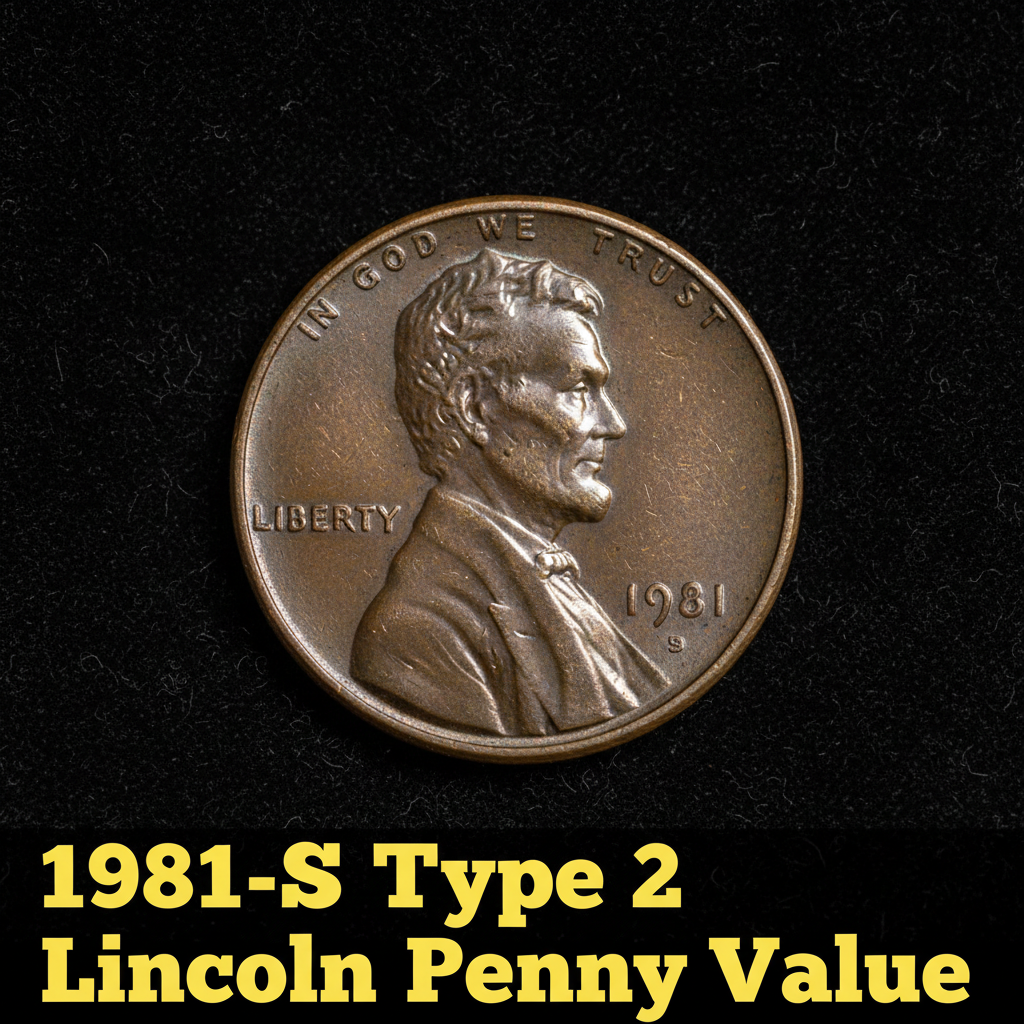
Before diving into values, it helps to understand why this coin even has a “Type 2” designation. In 1981, the San Francisco Mint produced proof Lincoln pennies in two distinct varieties. The Type 1 has a filled “S” mintmark — one that looks slightly blobby or closed. The Type 2, on the other hand, features a clear, sharp “S” mintmark with well-defined curves and open loops. This cleaner mintmark was introduced partway through the year after the mint switched to a different punch.
Because the Type 2 was produced in smaller quantities than the Type 1, it’s considerably scarcer. Collectors who specialize in modern proof sets quickly recognized this and began seeking out the Type 2 specifically. That scarcity is exactly what drives its value above an ordinary proof penny.
If you’re not sure which type you have, a free coin identifier app can help you compare mintmark details side by side. Getting the variety right is the first step toward knowing what your coin is truly worth. CoinKnow is one popular tool that makes variety identification quick and easy, even for beginners.
1981-S Type 2 Lincoln Penny Value by Grade
Proof coins are graded on the same 70-point Sheldon scale as regular coins, but with additional designations like PR (Proof) or DCAM (Deep Cameo). Deep Cameo coins — those with frosted devices against mirror-like fields — are the most desirable and carry the highest premiums.
Here’s a general value breakdown:
| Grade | Designation | Estimated Value |
|---|---|---|
| PR-65 | Proof | $2 – $5 |
| PR-67 | Proof | $5 – $10 |
| PR-67 | Deep Cameo (DCAM) | $10 – $20 |
| PR-69 | Deep Cameo (DCAM) | $20 – $50+ |
| PR-70 | Deep Cameo (DCAM) | $100 – $300+ |
For the most up-to-date auction prices and certified sales data, you can explore detailed 1981 Lincoln Penny price records across different grades to see how the market has moved over time.
How to Tell Type 1 from Type 2
The key difference is in the mintmark. On the Type 1, the “S” looks slightly filled in — the loops aren’t fully open and the curves can appear mushy. On the Type 2, the “S” is crisp and clean with clearly defined open loops at the top and bottom. You’ll want a magnifying glass or loupe with at least 5x magnification to make this comparison comfortably.
Keep in mind that both varieties were only struck at the San Francisco Mint as proof coins. You won’t find a 1981-S Lincoln penny in circulation since they were made exclusively for sale in proof sets. If someone claims to have found one in change, it almost certainly slipped out of a proof set at some point and has likely been handled, reducing its value considerably.
CoinKnow offers side-by-side mintmark comparison images that make it much easier for everyday collectors to distinguish between the two types without needing a reference book.
Certified vs. Raw Coins and What It Means for Your Value
A “raw” coin is one that hasn’t been professionally graded and encapsulated by a service like PCGS or NGC. For lower-grade examples of the 1981-S Type 2 penny, selling or holding raw is perfectly fine. But if you believe your coin is a PR-68 or PR-69 Deep Cameo or better, professional certification can dramatically increase buyer confidence and sale price.
Certification also officially attributes the coin as Type 2, which is critical since the difference between Type 1 and Type 2 isn’t always obvious to casual buyers. A certified slab removes all doubt. Submitting to PCGS or NGC typically costs $20–$40 or more per coin, so it only makes financial sense for higher-grade examples.
For a broader look at how the 1981 penny’s value changes across different mint marks and conditions, checking a dedicated coin price resource can save you a lot of guesswork.
Is the 1981-S Type 2 Penny Worth Holding Onto?
Honestly, yes — if it’s in gem condition. The 1981-S Type 2 Lincoln penny isn’t going to make you rich overnight, but it’s a recognized variety with a loyal collector following. High-grade DCAM examples continue to attract serious buyers, and the coin’s scarcity relative to the Type 1 keeps demand steady.
If you’re just getting started with coin collecting or variety hunting, this is a great coin to learn with. Download CoinKnow to help track your collection, identify varieties, and stay on top of current market values — it’s a handy tool whether you’re new to coins or have been collecting for years.
—
FAQ
Q: How do I know if my 1981-S penny is Type 1 or Type 2?
A: Look closely at the “S” mintmark with a magnifying glass. Type 2 has a sharp, open “S” with well-defined loops, while Type 1 appears more filled in or blobby. A coin identifier app or reference image can help you compare.
Q: Were 1981-S Type 2 pennies made for circulation?
A: No. All 1981-S Lincoln pennies — both Type 1 and Type 2 — were produced exclusively as proof coins for collector sets. They were never intended for everyday use, though some have escaped into the wild over the years.
Q: Is it worth getting my 1981-S Type 2 penny professionally graded?
A: It depends on the condition. If your coin shows no handling marks and has strong cameo contrast, professional grading from PCGS or NGC can significantly boost its value and marketability. For average examples, the grading fee may outweigh the benefit.