1894 Liberty Nickel Value What It’s Worth and Why Collectors Care
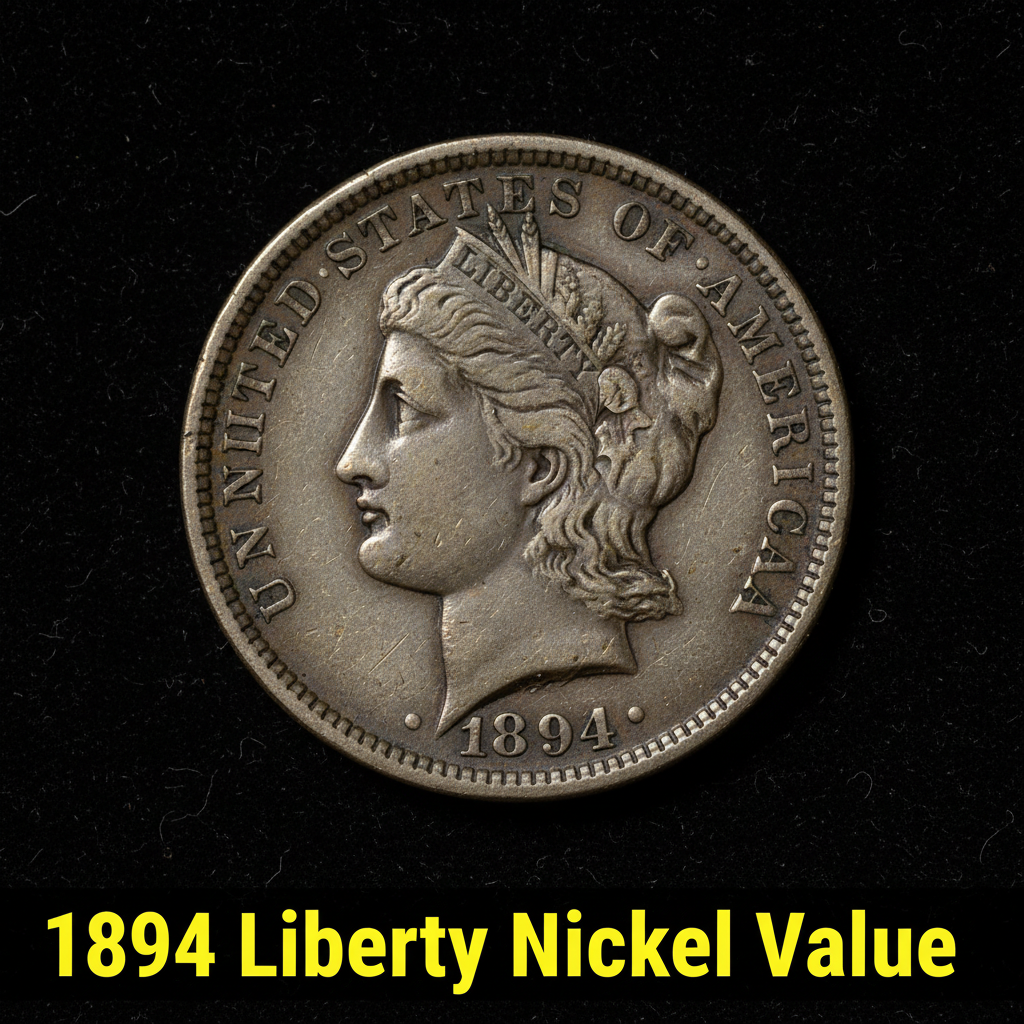
The 1894 Liberty Nickel is worth anywhere from $5 in heavily worn condition to well over $200 or more in higher grades, with certain mint state examples fetching thousands of dollars at auction. If you’ve come across one of these classic coins in an old jar, drawer, or inherited collection, you’re in the right place to find out exactly what you’ve got.
If you’re trying to identify the coin in your hand before diving into values, a free coin identifier app can help you confirm the coin’s design, date, and mint mark quickly — even if you know very little about coins. Once you’re sure it’s a genuine 1894 Liberty Nickel, understanding its grade and condition is the key to unlocking its true worth.
—
What Is the 1894 Liberty Nickel?
The Liberty Nickel, also known as the V Nickel because of the Roman numeral “V” on the reverse, was produced by the United States Mint from 1883 to 1912. The 1894 edition was struck at the Philadelphia Mint, which means it carries no mint mark. The obverse features a left-facing portrait of Lady Liberty surrounded by thirteen stars, while the reverse displays the large “V” encircled by a wreath and the words “UNITED STATES OF AMERICA.”
These coins were made of 75% copper and 25% nickel — a composition that gives them a silver-like appearance. In 1894, the Philadelphia Mint struck approximately 5,413,132 Liberty Nickels for general circulation. That mintage is relatively modest compared to later years, which is one reason surviving examples in fine or better condition attract solid collector interest today.
If you want to explore detailed 1894 Liberty Nickel prices across mint state grades, numismatic pricing databases can show you current market data broken down by grade and recent auction results.
—
How Much Is the 1894 Liberty Nickel Worth by Grade?
Coin value is almost entirely determined by condition, or “grade.” A coin that spent decades in a pocket will look very different from one that’s been preserved in a collection since the day it was minted. Here’s a general value table to help you gauge where your coin stands:
| Grade | Description | Estimated Value |
|---|---|---|
| Good (G-4) | Heavy wear, design visible but flat | $5 – $10 |
| Fine (F-12) | Moderate wear, major features clear | $15 – $30 |
| Extremely Fine (EF-40) | Light wear on high points | $50 – $90 |
| About Uncirculated (AU-55) | Slight wear, much luster remains | $120 – $175 |
| Mint State (MS-63) | No wear, some light bag marks | $250 – $400 |
| Mint State (MS-65) | Gem quality, strong luster | $700 – $1,500+ |
These are estimates based on recent market trends. Actual sale prices can vary depending on the buyer, the platform, and whether the coin has been professionally graded.
—
Factors That Affect 1894 Liberty Nickel Value
Beyond basic grade, a few other things can push the value of your 1894 Liberty Nickel up or down. Eye appeal matters — a coin with a sharp strike and original, undisturbed surfaces will attract more bidders than one that has been cleaned or polished. Cleaning is one of the most common issues with old coins, and it can significantly reduce value even if the coin looks shiny.
Strike quality also plays a role. Some Liberty Nickels from this era came out of the press with weak details, particularly on Liberty’s hair and the “V” on the reverse. A sharply struck 1894 coin in the same technical grade will almost always sell for more than a weakly struck example.
You might also want to check out 1894 coin values for other denominations from the same era, since many people find multiple old coins together and want to know the full picture of what they have.
CoinKnow is a great tool for doing this kind of research on the go. It gives you instant access to historical coin values, grade comparisons, and market trends — all from your phone.
—
Proof Versions and Special Strikes
In addition to regular business strike coins, the Philadelphia Mint produced a small number of Proof 1894 Liberty Nickels for collectors. These were struck with polished dies and specially prepared planchets, giving them a mirror-like finish and razor-sharp details. In 1894, the Mint produced just 1,060 proof examples.
A proof 1894 Liberty Nickel in PR-63 condition typically sells in the range of $200 to $400, while a top-grade PR-65 or better can easily exceed $600 to $1,000. These coins are rare enough that finding one in an old family collection would be a real discovery. If your coin looks unusually sharp and reflective, it’s worth getting it examined by a professional.
CoinKnow can help you compare proof vs. business strike characteristics right from your smartphone before deciding whether to seek a professional opinion.
—
FAQ
Q: How do I tell if my 1894 Liberty Nickel has been cleaned?
A: Cleaning often leaves hairline scratches visible under magnification, or gives the coin an unnatural brightness. Coins with original, undisturbed surfaces look slightly duller but more even in tone. If you’re unsure, CoinKnow has guides and visual examples to help you identify cleaning damage.
Q: Is there a mint mark on the 1894 Liberty Nickel?
A: No. All 1894 Liberty Nickels were struck at the Philadelphia Mint, which did not place a mint mark on coins during this period. If your coin has no mint mark, that’s normal and expected.
Q: Should I clean my 1894 Liberty Nickel before selling it?
A: Definitely not. Cleaning almost always reduces a coin’s collector value, sometimes dramatically. Leave the coin as-is and let a buyer or professional grader assess it in its natural state. Even light cleaning can drop a coin from one grade tier to the next.