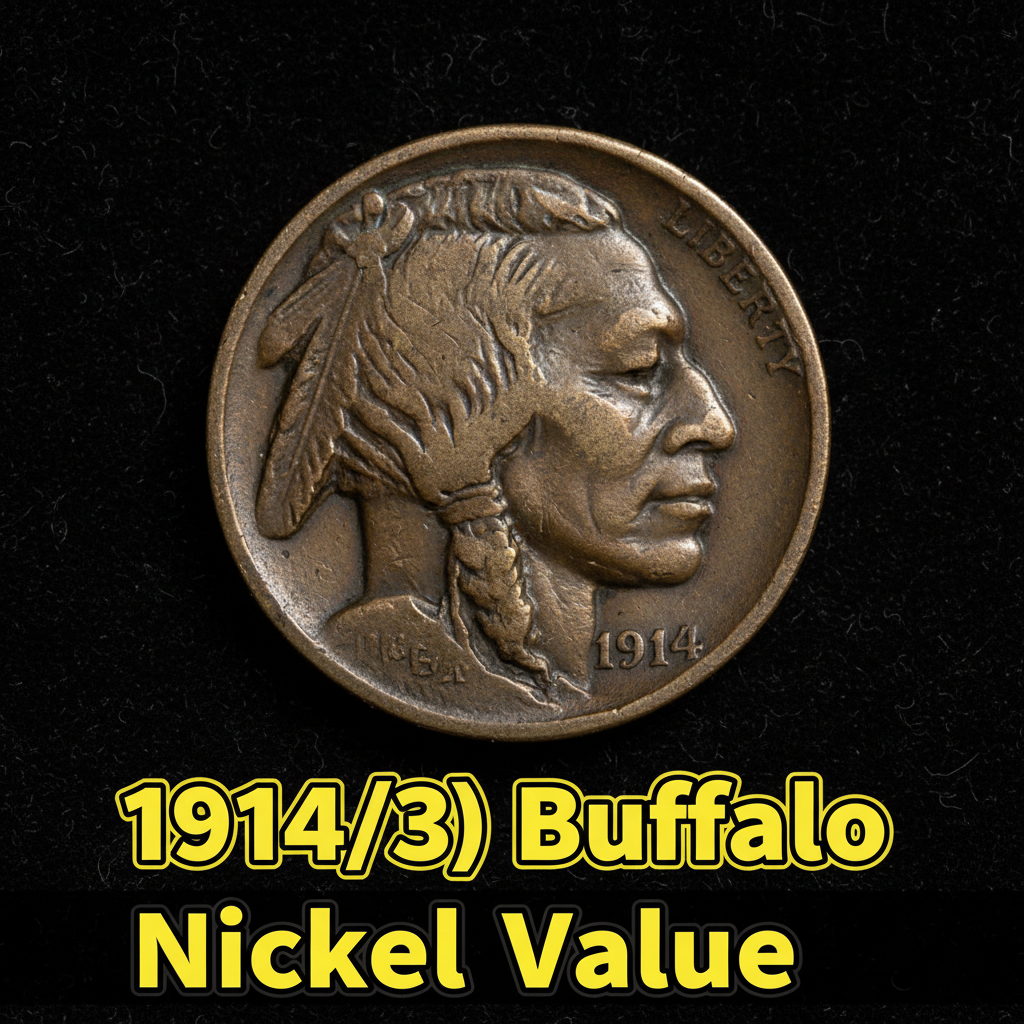
1914 Buffalo Nickel Value What This Classic Coin Is Worth Today
The 1914 Buffalo Nickel is worth anywhere from $10 in heavily worn condition to over $500 or more in higher mint state grades — and the rare 1914/3 overdate variety can fetch thousands of dollars from the right collector.
If you found one of these old nickels tucked away in a drawer or inherited coin collection, you’re holding a piece of genuine American history. The Buffalo Nickel, also known as the Indian Head Nickel, was designed by sculptor James Earle Fraser and entered circulation in 1913. The 1914 issue carries real collector interest — especially one specific variety. Before diving in, it’s worth knowing you can use a free coin identifier app to help confirm what you’re looking at before taking it to a dealer.
—
What Is the 1914/3 Buffalo Nickel?
The 1914/3 Buffalo Nickel is what coin collectors call an “overdate.” During minting at the Philadelphia Mint, a working die that had been punched with the date “1913” was repunched with “1914,” leaving a faint trace of the underlying “3” still visible beneath the “4.” This kind of mistake was relatively common in the early 20th century, but it makes the coin significantly more desirable — and more valuable — than a regular 1914 Buffalo Nickel.
To spot the overdate, you’ll need at least a 5x loupe or magnifying glass. Look closely at the final digit of the date. You should see remnants of a “3” showing through the “4,” giving it a slightly thickened or doubled appearance. Not every 1914 nickel is an overdate — most are just standard strikes — so close examination really matters here. If you’re unsure, CoinKnow can help you identify the variety quickly using your phone’s camera.
—
1914/(3) Buffalo Nickel Value by Grade
Condition is everything in coin collecting. A coin that looks “old and worn” to most people might still be worth a respectable amount, but the difference between a Fine and an MS-63 example is dramatic. Here’s a general value breakdown for the 1914/3 overdate variety:
| Grade | Description | Estimated Value |
|---|---|---|
| Good (G-4) | Heavy wear, date visible | $50 – $80 |
| Very Good (VG-8) | Moderate wear, some detail | $80 – $130 |
| Fine (F-12) | Even wear, major design clear | $130 – $250 |
| Very Fine (VF-20) | Light to moderate wear | $250 – $450 |
| Extremely Fine (EF-40) | Slight wear on high points | $500 – $800 |
| MS-63 (Mint State) | Uncirculated, minor marks | $2,000 – $4,000+ |
For the most up-to-date auction results and certified population data, you can explore current 1914 Buffalo Nickel prices across mint state grades to see how recent sales are trending.
—
How Mint Marks Affect the 1914 Buffalo Nickel
In 1914, Buffalo Nickels were produced at three mints: Philadelphia (no mint mark), Denver (D), and San Francisco (S). For the standard issue, all three facilities struck coins, but the 1914/3 overdate is associated specifically with the Philadelphia Mint and carries no mint mark.
The mint mark — or lack of one — is found on the reverse of the coin, on the lower left side beneath the words “FIVE CENTS.” Denver and San Francisco coins from 1914 carry their own collector premiums, particularly in higher grades, but they are not the overdate variety. If your coin has a “D” or “S,” it’s still worth researching, but the 1914/3 overdate story applies only to the no-mint-mark Philadelphia issue.
—
What Makes a 1914 Buffalo Nickel More Valuable?
Beyond the overdate factor, several things drive up the price of a 1914 Buffalo Nickel. Sharp, full horn detail on the bison is one of the biggest value indicators — the horn was a high-relief area that wore down quickly in circulation, so coins that retain a full, sharp horn command a significant premium. Native American portrait sharpness on the obverse also matters.
Eye appeal plays a role too. Coins with original skin (no cleaning or polishing), even surfaces, and natural toning are far more desirable than those that have been dipped or harshly cleaned. A cleaned coin can lose 30–50% of its potential value instantly. For a detailed breakdown of 1914 nickel value factors by condition and variety, it’s worth reviewing before heading to a coin show or listing one for sale.
If you want a quick assessment from your couch, CoinKnow lets you photograph both sides of the coin and get an instant variety identification and grade estimate — a handy first step before professional certification.
—
Should You Get Your 1914/3 Buffalo Nickel Certified?
If your coin grades Fine or better and you believe it’s the overdate variety, professional certification from PCGS or NGC is absolutely worth considering. Slabbed and attributed coins sell for measurably more than raw (uncertified) examples, especially online where buyers can’t examine the coin in person. Certification fees typically run $30–$50 per coin for standard service, which is easily justified on a coin worth several hundred dollars or more.
CoinKnow can give you a solid preliminary read on your coin’s condition and help you decide whether professional grading makes financial sense before you commit.
—
FAQ
Q: How do I know if my 1914 Buffalo Nickel is the overdate variety?
A: Use a magnifying loupe (5x or higher) and examine the last digit of the date carefully. The 1914/3 overdate shows remnants of a “3” peeking through the “4.” It can be subtle, so good lighting and magnification are essential.
Q: Is a 1914 Buffalo Nickel with no mint mark always an overdate?
A: No. The vast majority of 1914 Philadelphia Mint nickels are regular-date strikes. The 1914/3 overdate is a specific variety that requires visual confirmation — not all no-mint-mark 1914 nickels carry the overdate characteristic.
Q: Where is the best place to sell a 1914/3 Buffalo Nickel?
A: For certified examples, major auction houses like Heritage Auctions or Stack’s Bowers typically bring the strongest prices. For raw coins in lower grades, coin dealers and reputable online marketplaces are solid options. Getting multiple offers before selling is always a smart move.