1917-D Buffalo Nickel Value Guide How Much Is It Worth Today
The 1917-D Buffalo Nickel is worth anywhere from $15 in heavily worn condition to over $2,000 or more in high mint state grades. If you’ve found one of these classic American coins in an old jar or drawer, you’re holding a piece of history that could be surprisingly valuable depending on its condition.
What Makes the 1917-D Buffalo Nickel Special
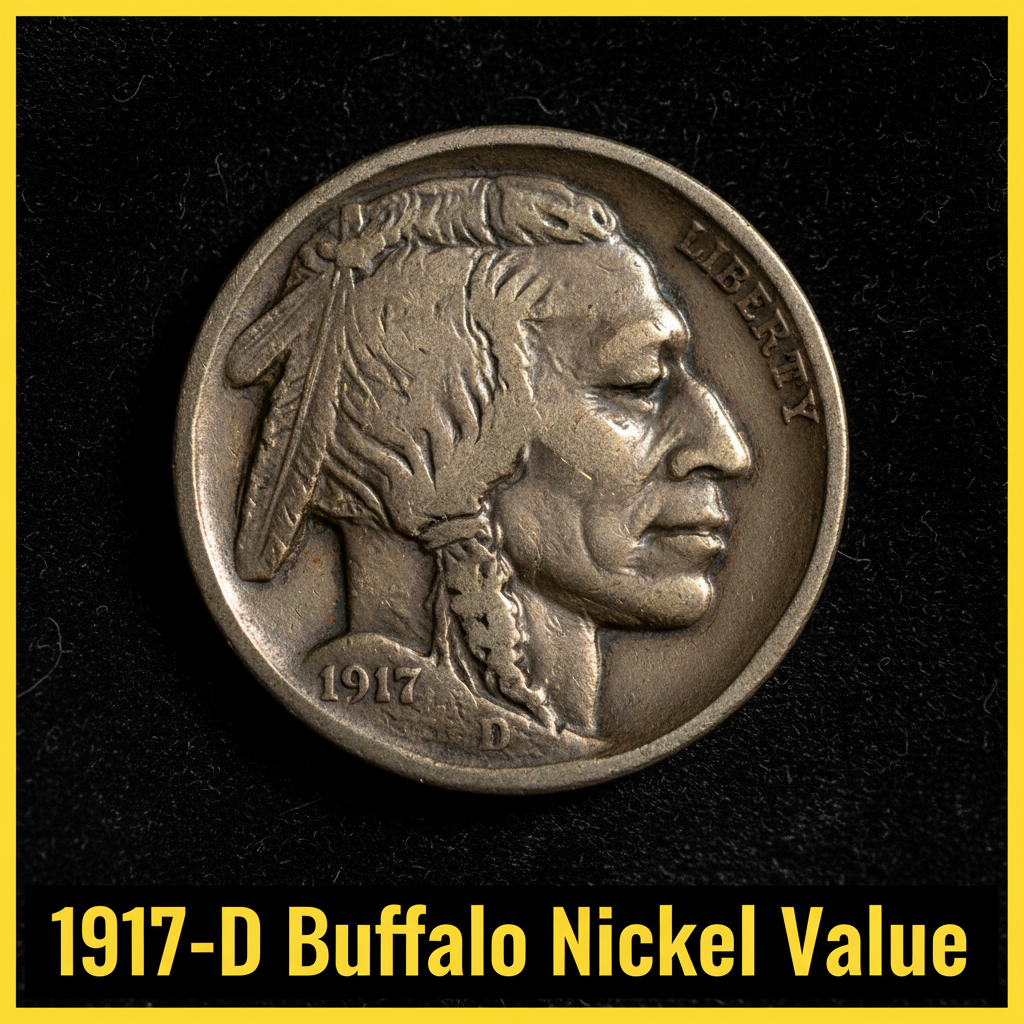
The 1917-D Buffalo Nickel was struck at the Denver Mint, identified by the small “D” mintmark found on the reverse side of the coin, just below the words “FIVE CENTS.” This coin is part of the beloved Buffalo Nickel series, officially called the Indian Head Nickel, designed by James Earle Fraser. The series ran from 1913 to 1938 and remains one of the most iconic coin designs in American history.
The Denver Mint produced 9,910,800 Buffalo Nickels in 1917, making it a moderately available date — but far from common in good condition. A century of circulation, pocket wear, and improper storage has taken a toll on most surviving examples, meaning well-preserved coins are genuinely scarce and collectible.
If you’re not sure what coin you have, using a free coin identifier app can help you confirm the date, mintmark, and series before you try to assess its value. These tools are great for beginners who are just getting started with old coins.
1917-D Buffalo Nickel Value by Grade
Coin value is almost entirely driven by condition, and the 1917-D is no exception. Collectors use a grading scale from 1 (barely identifiable) to 70 (perfect uncirculated). Here’s a general breakdown of what you might expect:
| Grade | Description | Estimated Value |
|---|---|---|
| Good (G-4) | Heavy wear, date visible | $15 – $20 |
| Very Good (VG-8) | Moderate wear, outline clear | $22 – $35 |
| Fine (F-12) | Moderate to light wear | $40 – $60 |
| Very Fine (VF-20) | Light wear on high points | $65 – $90 |
| Extremely Fine (EF-40) | Slight wear, sharp detail | $120 – $175 |
| Mint State (MS-63) | Uncirculated, minor marks | $500 – $900 |
| Mint State (MS-65) | Gem uncirculated | $1,500 – $2,500+ |
For the most current auction results and retail pricing, check out this detailed 1917-D Buffalo Nickel price data by grade and recent sales to see exactly what buyers are paying today.
How to Identify Your 1917-D Buffalo Nickel
Start by looking at the reverse (tails side) of your coin. The Buffalo Nickel features a bison standing on a mound or a plain, depending on the year. On 1917 coins, the bison stands on a flat plain, and the words “FIVE CENTS” appear in the lower portion. Just below “FIVE CENTS,” you should see a small “D” — that’s your Denver mintmark. No letter means Philadelphia; “S” would indicate San Francisco.
The obverse (heads side) shows a Native American portrait facing right, with “LIBERTY” on the left and the date below. If the date is faded or partially worn away — a very common problem with Buffalo Nickels — the coin’s value drops significantly. Check carefully under good lighting or use a magnifying glass.
CoinKnow is a handy app that lets you photograph your coin and instantly get an estimated grade and value range. It’s especially useful if you’re unsure whether your coin is circulated or uncirculated, which makes a huge difference in price.
What Affects the 1917-D Buffalo Nickel Value
Beyond grade, a few other factors can push the value of your 1917-D Buffalo Nickel higher or lower:
– Full Horn Detail: The buffalo’s horn is one of the first details to wear away. Coins with a complete, sharp horn are worth significantly more than those without.
– Luster: Uncirculated coins with original mint luster fetch a premium at auction.
– Strike Quality: Some Denver Mint coins from this era were weakly struck, especially around the cheekbone and horn. A sharply struck example stands out.
– Cleaning: Coins that have been polished or cleaned are worth much less to collectors, even if they look shiny.
You can explore comprehensive 1917 Buffalo Nickel value information including mint comparisons and grading tips to understand how your specific coin stacks up.
CoinKnow also offers a side-by-side grade comparison feature that helps you match your coin’s details against certified examples — a great way to get a realistic idea of what you have before taking it to a dealer.
Should You Get Your 1917-D Buffalo Nickel Certified
If your coin looks uncirculated or shows strong detail, professional certification through PCGS or NGC is worth considering. Certified coins in holders (called “slabs”) typically sell for 20–40% more than raw coins of the same grade, simply because buyers trust the grade. The cost of certification usually runs $30–$50 per coin, so it makes financial sense for any example worth over $200.
For lower-grade circulated examples, certification usually isn’t necessary. A knowledgeable local coin dealer can give you a fair appraisal, and tools like CoinKnow give you a solid starting point so you know whether you’re looking at a $20 coin or a $2,000 one before you walk through the door.
FAQ
Q: How do I know if my Buffalo Nickel is from Denver?
A: Look on the reverse side of the coin, just below the words “FIVE CENTS.” A small “D” mintmark indicates it was struck at the Denver Mint. No mintmark means Philadelphia, and an “S” means San Francisco.
Q: My 1917-D Buffalo Nickel has a worn-off date — is it worth anything?
A: Unfortunately, a Buffalo Nickel with a missing or unreadable date is generally worth only $1–$2, regardless of mintmark. The date is essential for identification and collector value. There is a chemical restoration process called “Nic-a-Date,” but coins treated this way are considered damaged and worth little to collectors.
Q: Is the 1917-D Buffalo Nickel rare?
A: It’s not considered a rare date in the series, but finding one in excellent condition is uncommon. Most surviving examples show heavy wear. In mint state grades (MS-65 and above), the 1917-D is genuinely scarce and commands strong collector interest and premium prices.