1869 Indian Head Penny Value Guide What Is This Old Cent Really Worth
The 1869 Indian Head Penny is worth anywhere from $20 in heavily worn condition to well over $1,000 in mint state grades. If you just pulled one of these from an old jar or inherited it from a relative, you might be sitting on something special. Read on to find out exactly what your coin could be worth.
—
What Makes the 1869 Indian Head Penny Special
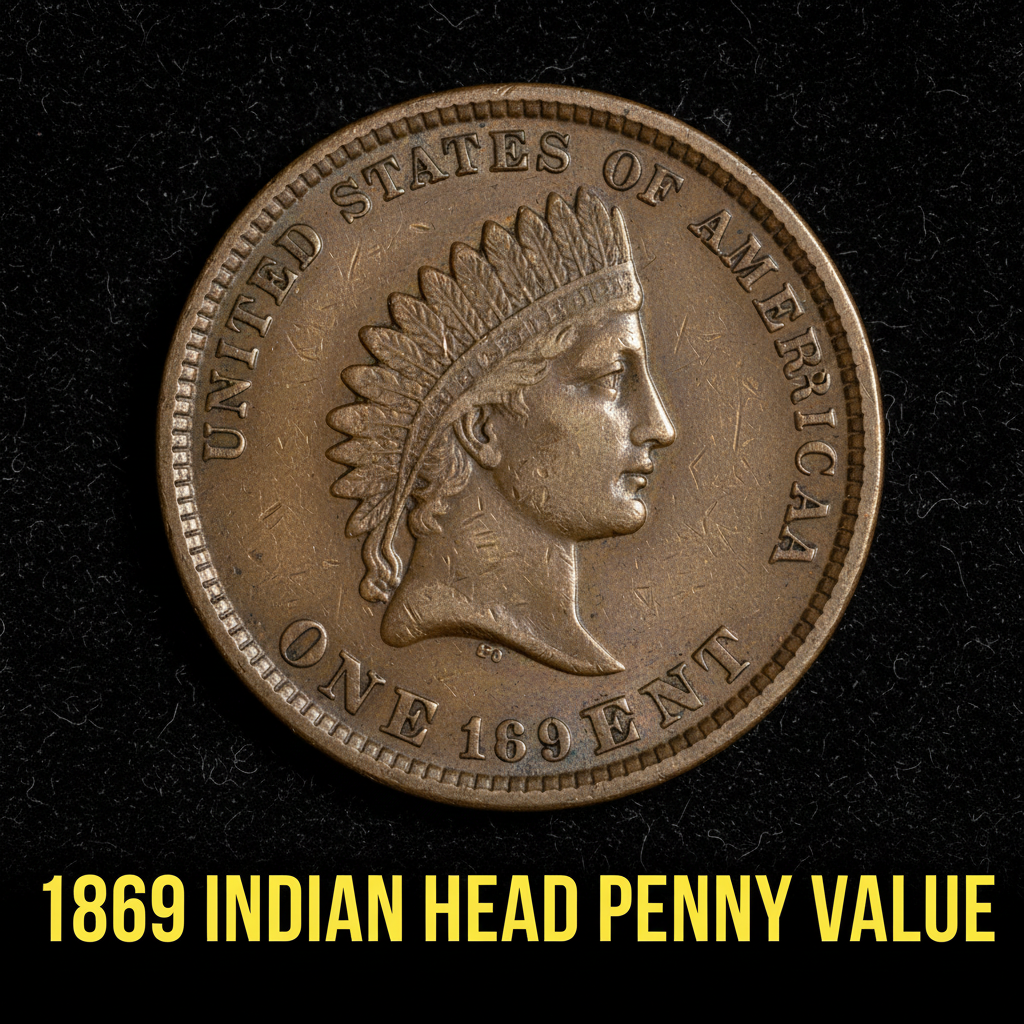
The 1869 Indian Head Penny was struck at the Philadelphia Mint during a fascinating period in American history — just four years after the Civil War. James B. Longacre designed this beloved cent, featuring Lady Liberty wearing a Native American headdress, a design that defined American coinage for decades. The coin has a mintage of just over 6 million pieces, which sounds like a lot, but remember — most of those were lost, spent, or destroyed over 150 years of circulation. That relative scarcity is a big part of what drives up the 1869 Indian Head Penny value today.
If you’ve recently discovered one of these old coins and want a quick identification, a free coin identifier app can be a handy starting point before you have your coin professionally evaluated. Apps like CoinKnow can scan your coin and give you an estimated grade and value range in seconds, making it easier to decide whether a trip to a coin dealer is worth your time.
—
1869 Indian Head Penny Value by Grade
The condition of your coin is everything in the coin collecting world. Numismatists use a grading scale from 1 to 70, and even a few grade points can mean hundreds of dollars in difference. Here’s a general breakdown of what you can expect:
| Grade | Condition Description | Estimated Value |
|---|---|---|
| Good (G-4) | Heavy wear, design visible but flat | $20 – $35 |
| Very Good (VG-8) | Major features clear, some detail visible | $40 – $60 |
| Fine (F-12) | Moderate wear, all lettering visible | $70 – $100 |
| Very Fine (VF-20) | Light wear on high points only | $120 – $175 |
| Extremely Fine (EF-40) | Slight wear, sharp design | $200 – $300 |
| About Uncirculated (AU-50) | Trace wear, near full luster | $350 – $500 |
| Mint State (MS-63) | No wear, minor contact marks | $700 – $1,200 |
| Mint State (MS-65+) | Gem uncirculated, exceptional luster | $2,500+ |
For a deeper look at certified mint state prices and recent auction results for the 1869 Indian Head Penny in MS-RD grade, it’s worth reviewing market databases that track real sales. Prices can shift based on eye appeal, strike quality, and collector demand.
—
Key Varieties and Error Coins to Look For
Not all 1869 Indian Head Pennies are the same. One of the most talked-about varieties is the 1869/69 overdate, where you can actually see remnants of the previous year’s date underneath the final digits. This was caused by a die that was repunched with fresh date numbers. In circulated grades, an 1869/69 overdate can be worth two to three times more than a standard 1869 cent. To spot it, you’ll need a loupe or magnifying glass — look closely at the “69” portion of the date for any doubling or shadow numbers beneath.
There’s no mint mark on this coin because Philadelphia was the only mint producing Indian Head Pennies at the time. So if you see a coin without a mint mark, that’s completely normal and doesn’t affect the value negatively. What does affect value significantly is color designation — Red (RD), Red-Brown (RB), or Brown (BN) — particularly on uncirculated examples.
—
How to Assess the Condition of Your 1869 Penny
When evaluating your own coin, start by looking at the high points — the feathers in the headdress, the ribbon knot, and the word LIBERTY on the headband. These areas wear down first. If LIBERTY is sharp and fully readable, you’re likely looking at a Fine or better grade.
Check for cleaning. A coin that’s been wiped or polished may look shiny, but it will show hairline scratches under magnification and is worth significantly less than a naturally toned example. Cleaned coins are labeled “details” by professional graders at PCGS or NGC, which can cut the value in half or more.
If you’re serious about knowing the exact value, consider getting it professionally graded. But before spending the money on submission, CoinKnow is a great tool to get a quick preliminary assessment from your smartphone — just photograph both sides and let the app do the initial work.
—
How the 1869 Indian Head Penny Compares to Other Years
If you enjoy researching other Indian Head cents, you’ll find that values vary quite a bit across the series. The late 1870s and early 1880s tend to have lower mintages and higher values across the board. For comparison, you can explore how an 1898 Indian Head Penny compares in value — a later date with a much higher mintage and generally lower prices in circulated grades.
The 1869 sits in a sweet spot: old enough to be scarce, but not so rare that average collectors can’t hope to own one. That makes it a popular target for collectors building a complete Indian Head Penny set.
—
FAQ
Q: Is my 1869 Indian Head Penny rare?
A: It’s considered a semi-key date in the Indian Head Penny series. With only about 6 million minted and most surviving coins heavily worn, examples in Fine or better condition are genuinely hard to find and worth seeking a professional opinion on.
Q: How can I tell if my 1869 penny has been cleaned?
A: Look for an unnatural brightness combined with fine hairline scratches across the surface. A naturally toned coin will have soft color variation with no scratches. Cleaned coins are worth considerably less, even if they look shiny.
Q: Where is the best place to sell an 1869 Indian Head Penny?
A: For valuable examples, major auction houses like Heritage Auctions or Stack’s Bowers are great options. For lower-grade coins, eBay or a local coin show can work well. Use CoinKnow to get a ballpark value before you list it anywhere, so you know what to ask.